
Luxury Home Design
& The Finishing Touches That Define True Elegance
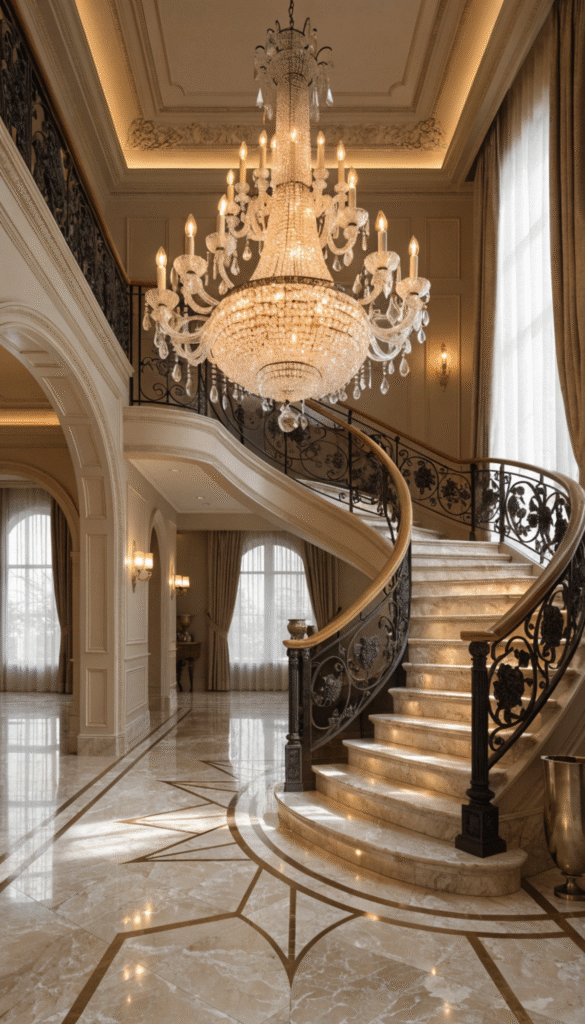
Close your eyes for a moment and imagine walking through the front door of your dream home. The air carries a faint trace of fresh flowers. The light falls just so — warm, golden, deliberate. Every surface you touch whispers quality. Every corner you turn reveals something beautiful, something intentional, something unmistakably you.
That home exists. And it is not reserved for the ultra-wealthy, the architecturally gifted, or those born with an innate sense of style. It is available to every homeowner willing to learn the language of luxury — and today, on lifestyleleadershub.com, I am going to teach you that language in full.
My name is not what matters here. What matters is this: after two decades of developing premium properties and designing high-end interiors across some of the world’s most coveted addresses, I have distilled everything I know about creating truly luxurious homes into this single, comprehensive guide. Whether you are renovating a modest apartment, finishing a newly built home, or elevating a property you have owned for years — this article will transform the way you see, experience, and create your living space.
Luxury, in its truest form, is not about price tags. It is about precision. It is about intention. It is about understanding that every single detail — from the weight of a door handle to the thread count of your linen — either adds to or subtracts from the overall experience of a home. This is the art of luxury home design, and by the end of this guide, you will master it.
“Luxury is in each detail.” — Hubert de Givenchy
PART ONE: UNDERSTANDING LUXURY — WHAT IT REALLY MEANS
1.1 The Psychology of Luxury Living
Before we discuss marble countertops or bespoke joinery, we need to address something far more fundamental: what luxury actually feels like in a home — and why it feels that way.
Luxury living is a full sensory experience. It engages your sight, your touch, your sense of smell, your hearing, and even your proprioception — the way your body feels as it moves through a space. A truly luxurious home makes you feel safe, elevated, and deeply at ease simultaneously. It is an environment that reduces cortisol and increases serotonin. It is, quite literally, good for your health.
Research in environmental psychology consistently shows that our surroundings have a profound effect on our mood, productivity, creativity, and even our relationships. Cluttered, poorly lit, badly proportioned spaces create anxiety and tension. Thoughtfully designed, well-finished, harmoniously appointed spaces do the opposite. This is why luxury home design is never superficial — it is deeply functional at its most human level.
Understanding this is your first step. When you choose a material, a colour, a light fitting, or a piece of furniture — you are not merely decorating. You are curating an experience. Every decision either enhances or diminishes the life that will be lived within those walls.
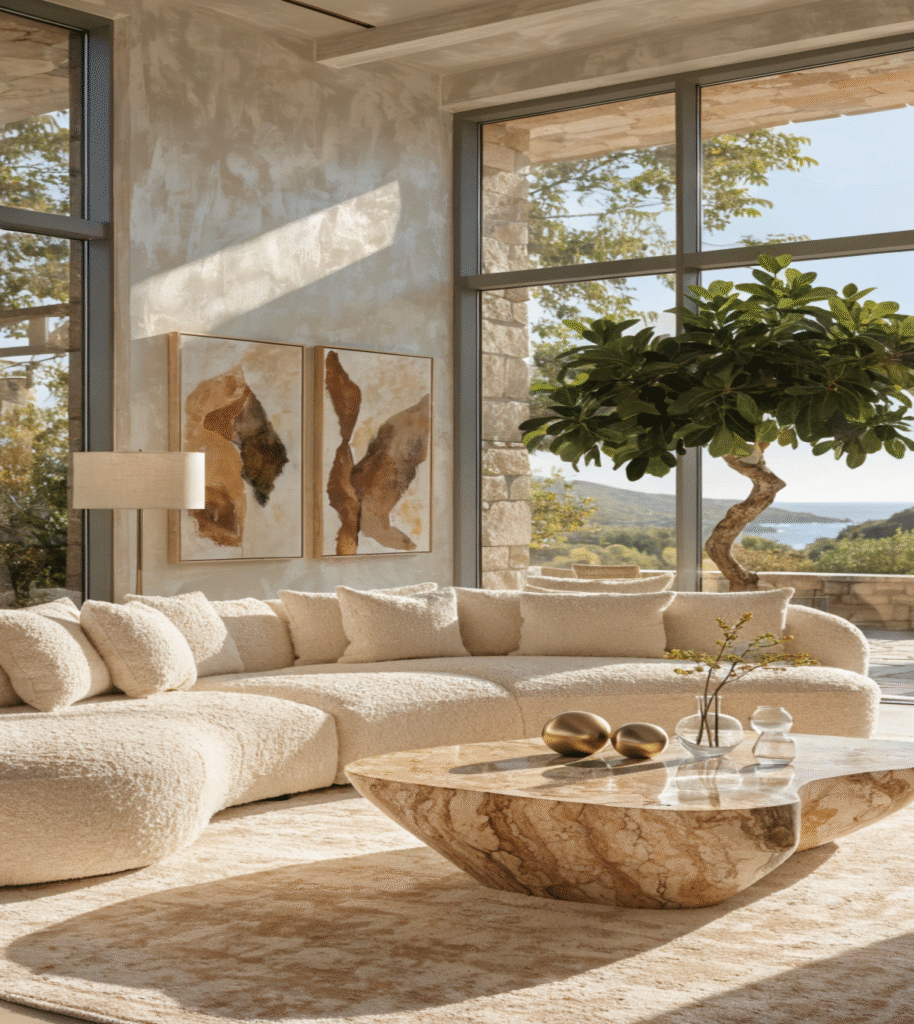
1.2 The Difference Between Expensive and Luxurious
This is one of the most important distinctions in all of home design, and one that even seasoned property owners consistently miss: expensive and luxurious are not the same thing.
You can spend a fortune on a home and it can still feel cold, disconnected, and hollow. Conversely, with the right knowledge and an eye for detail, you can create a space of extraordinary warmth and elegance at a fraction of the price most people assume necessary.
Expensive is about cost. Luxurious is about quality, proportion, coherence, and intention. A room becomes luxurious when everything within it belongs there — when the scale is right, when the textures complement one another, when the light reveals rather than conceals, when the palette soothes without boring, and when there is a clear, confident point of view running through every design decision.
The most common mistake homeowners make is what I call ‘accumulation without curation.’ They buy beautiful individual items, but without a unifying design vision, the result feels like a very expensive antiques market rather than a home. True luxury requires editing as much as it requires adding.
| “A room should feel pulled together — not thrown together. The magic is in the edit, not the excess.” |
1.3 The Five Pillars of Luxury Home Design
In my experience designing and developing premium properties, I have identified five non-negotiable pillars that every truly luxurious home is built upon. Neglect even one of them, and the entire experience is diminished. Master all five, and you will create something genuinely extraordinary.
- PROPORTION & SCALE — Every element must be correctly sized relative to its surroundings.
- MATERIAL QUALITY — The surfaces you live with must feel as beautiful as they look.
- LIGHTING DESIGN — Light is the single most powerful tool in any designer’s arsenal.
- COHERENT COLOUR & TEXTURE — A disciplined palette creates calm; contrast creates drama. Both are valid; confusion is not.
- THE FINISHING TOUCHES — The details that separate a good room from a great one.
We will explore each of these pillars in detail throughout this guide. By the time you reach the end, you will have a complete framework for approaching every design decision in your home with confidence and clarity.
PART TWO: PROPORTION & SCALE — THE INVISIBLE ARCHITECTURE
2.1 Why Proportion is Everything
Walk into any room designed by a master interior designer, and your first reaction will almost never be about the furniture or the artwork. It will be a feeling — a sense of rightness, of balance, of harmony. That feeling has a name: proportion.
Proportion is the relationship between the sizes of elements within a space — the height of a ceiling relative to the width of the room, the size of a sofa relative to the dimensions of the floor, the height of artwork relative to the wall it hangs on. When proportion is correct, your brain registers beauty without being able to articulate exactly why. When proportion is wrong, you feel it as a vague discomfort that no amount of beautiful furniture can fix.
The ancient Greeks understood this intuitively and codified it in what we call the Golden Ratio — a mathematical proportion (approximately 1:1.618) that appears throughout nature and that the human eye finds inherently beautiful. You do not need a calculator to use this principle, but understanding it conceptually will transform the way you approach every design decision.
2.2 Practical Proportion Rules Every Homeowner Must Know
Here are the proportion principles I apply to every single project, regardless of budget or style. These are not arbitrary rules — they are the distilled wisdom of centuries of architectural and interior design practice.
The 2:3 Furniture Rule
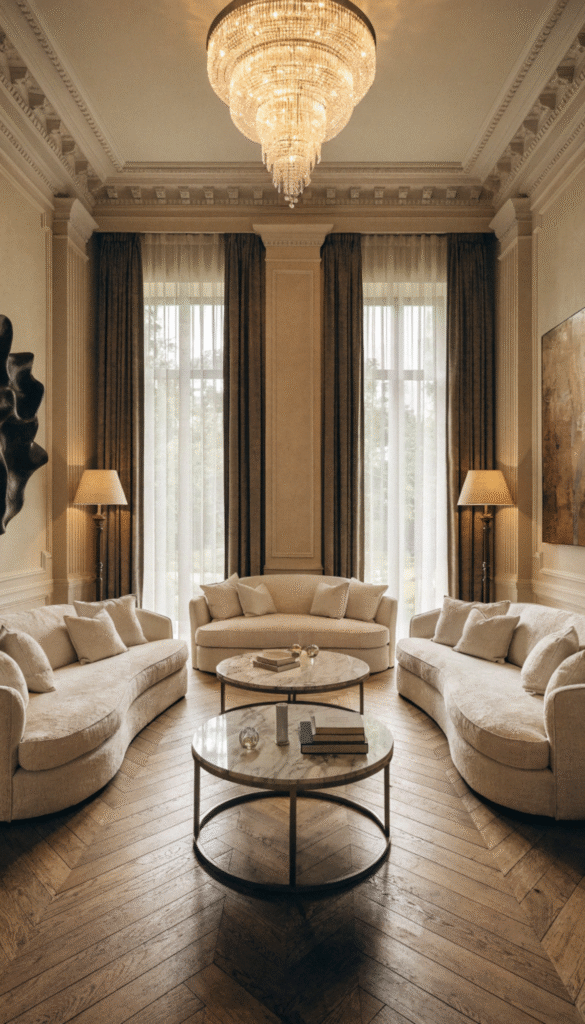
Your largest piece of furniture in any room — typically the sofa in a living room — should occupy approximately two-thirds of the main wall it faces. Too small and the furniture looks lost; too large and the room feels cramped. This one rule alone will immediately elevate the look of most living rooms.
The Rug Anchor Principle
An undersized rug is the single most common and most damaging proportion mistake in home design. Your area rug should be large enough for at least the front legs of all major seating pieces to rest on it. In a dining room, the rug should extend at least 60cm beyond the table on all sides to allow chairs to be pulled out without leaving the rug. When in doubt, always go larger.
The Picture Rail Height
Artwork should be hung at eye level, which in design terms means the centre of the piece at approximately 145-150cm from the floor. When grouping multiple pieces, treat the arrangement as a single unit and centre that unit at the same height. One of the most transformative changes you can make in a home is simply re-hanging your existing artwork at the correct height.
Ceiling Height and Window Treatment
Curtains should always be hung as close to the ceiling as possible and should puddle slightly on the floor or break gently. This creates the illusion of height and grandeur regardless of the actual ceiling height. Hanging curtains at window-frame height — a tragically common mistake — makes every room feel lower and smaller than it actually is.
| “Hang your curtains high and let them touch the floor. This single act will add ten years of sophistication to any room.” |
PART THREE: THE LANGUAGE OF LUXURY MATERIALS
3.1 Why Materials Matter More Than You Think
Run your hand across a slab of book-matched Calacatta marble. Feel the cool, almost living weight of it under your palm. Now touch a high-quality porcelain tile designed to mimic that same marble. Even with your eyes closed, you know the difference. Your fingertips, your nerve endings, your subconscious — they all know. This is why material quality is non-negotiable in luxury design.
Materials communicate value, intention, and permanence. Natural stone, solid hardwood, hand-crafted textiles, wrought metals — these materials carry within them the story of the earth and the skill of human hands. They age beautifully, developing patina and character over time. They ground a space in something real, something irreplaceable.
This does not mean that every surface must be the most expensive option available. Strategic use of premium materials — anchoring a space with one or two truly extraordinary surfaces, then supporting them with high-quality but more cost-effective complements — is the professional approach to material specification.
3.2 The Hierarchy of Luxury Surfaces
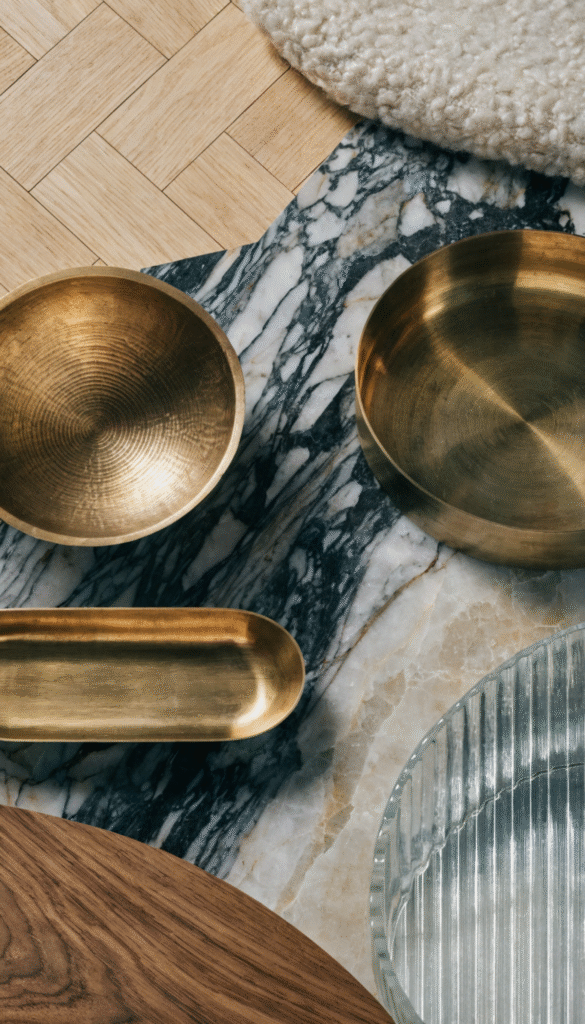
After years of specifying materials for high-end developments, I have developed what I call the Hierarchy of Luxury Surfaces — a framework for deciding where to invest in premium materials and where you can be more strategic.
Tier One: The Statement Surfaces
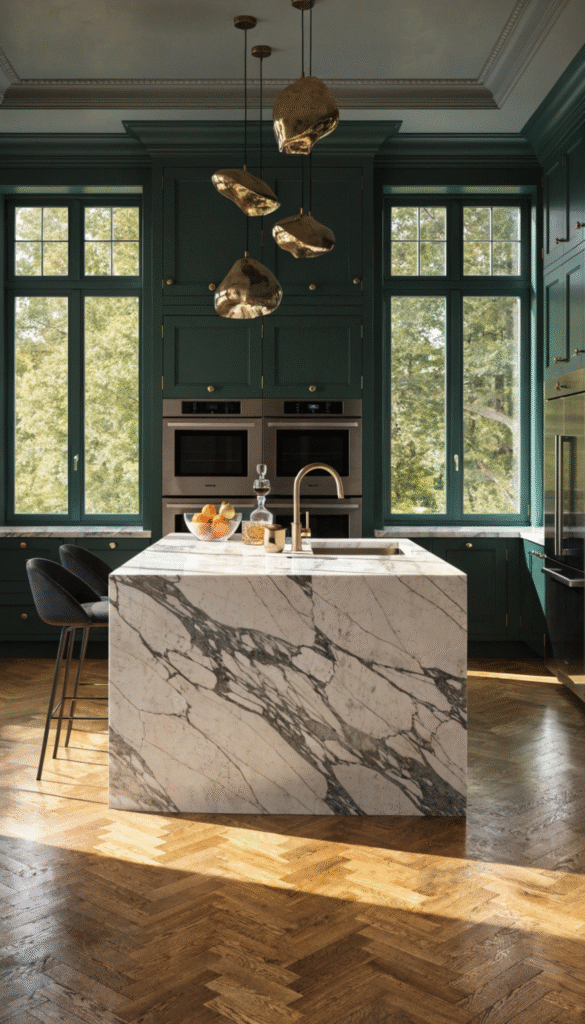
These are the surfaces that immediately communicate the quality and intent of the entire space. They deserve your maximum investment. In most homes, they include the kitchen countertop and backsplash, the primary bathroom wet areas, the main living area flooring, and the entrance foyer floor. A breathtaking Calacatta marble island, a dramatic book-matched stone feature wall, or an expanse of engineered European white oak flooring — these are the investments that define a home’s character and retain or increase its value over time.
Tier Two: The Supporting Cast
These surfaces frame and enhance your statement pieces without competing with them. They should be high quality but more restrained in their visual impact. Internal doors, cabinetry, wall cladding, and secondary bathroom surfaces fall into this category. Solid-core doors with quality hardware, shaker or slab cabinetry in sophisticated muted tones, and well-chosen wall finishes like limewash paint or subtle texture will elevate the entire space without demanding equal attention to your Tier One investments.
Tier Three: The Invisible Quality
These are the materials and finishes you feel but rarely consciously see — the skirting boards, the architraves, the depth of a cornice, the quality of a paint finish. These details are invisible when done well and glaringly obvious when done poorly. Never compromise on paint quality: the difference between a builder-grade paint finish and a premium, properly prepared and applied finish is the difference between a house and a home.
3.3 The Luxury Materials Glossary — A Developer’s Guide
Here is your expert reference guide to the materials most associated with luxury home design, along with the insider knowledge you need to specify and use them correctly.
Natural Stone: Marble, Travertine & Limestone
Marble is the material most synonymous with luxury, and for good reason. The geological rarity of each unique slab, the extraordinary range of veining patterns, the cool smooth touch, and the way it interacts with light are unmatched. The key to using marble successfully is understanding its character: it is a living material that will etch, stain, and patinate over time. For high-use surfaces like kitchen countertops, seal it regularly and embrace the patina as part of its charm. For lower-traffic applications — bathroom walls, fireplace surrounds, side tables — the maintenance concern diminishes significantly. Travertine offers a warmer, more textured alternative with a distinctly Mediterranean character, while limestone provides a quieter, more matte sophistication.
Engineered Timber Flooring
For flooring, engineered hardwood is the premier choice for luxury properties. Unlike solid timber, engineered boards are dimensionally stable — meaning they will not warp, shrink, or gap with changes in humidity and temperature. The real wood veneer on top is indistinguishable from solid timber in appearance and texture, and can be sanded and refinished multiple times. Choose boards of 180mm width or wider — the broader the board, the more luxurious the appearance. European White Oak, French Oak, and American Black Walnut are the perennial premium choices. Always specify brushed or aged finishes rather than high-gloss: they are more forgiving, more sophisticated, and more timeless.
Bespoke Joinery and Millwork
Nothing communicates bespoke luxury like custom joinery — built-in cabinetry, library shelving, window seats, panelled walls, and fitted wardrobes designed and crafted precisely for the specific dimensions and character of a space. The premium here is not merely aesthetic: well-designed built-in joinery creates storage solutions that a mass-produced piece of furniture simply cannot match, and it adds permanently to a property’s value. When budgeting for a luxury interior, I always advise allocating a significant proportion to custom joinery — it is the investment with the most visible, lasting impact.
PART FOUR: THE ART AND SCIENCE OF LUXURY LIGHTING
4.1 Light: The Most Powerful Design Tool You Are Probably Underusing
If I could give every homeowner just one piece of advice — one single change that would have the most transformative effect on their living space — it would be this: invest in proper lighting design. Not in better furniture. Not in more expensive surfaces. Lighting.
A mediocre room with extraordinary lighting will feel luxurious. A room filled with beautiful, expensive furniture and materials, lit by a single central ceiling fixture, will feel flat, harsh, and uncomfortable. Lighting is the invisible architecture that shapes everything you see, feel, and experience within a space. It is, without question, the most undervalued and most misunderstood element of residential design.
Professional lighting designers — and property developers who understand their craft — think about light in layers. The concept of layered lighting is the foundation of every beautifully lit space in the world, from five-star hotel lobbies to Michelin-starred restaurants to the finest private residences. The principle is straightforward: no single light source can do everything, and attempting to make it do so results in a space that feels institutional and uncomfortable. Instead, you layer multiple types of light, each serving a specific purpose, to create an environment that is flexible, beautiful, and deeply liveable.
| 📷 PICTURE PROMPT — SECTION 4.1 — Insert after the paragraph explaining layered lighting → INSERT IMAGE HERE Ideogram Prompt: Luxury home interior at evening, showcasing perfect layered lighting design, warm ambient glow from recessed ceiling lights, dramatic picture lights illuminating large abstract artwork, glowing table lamps on marble console, under-cabinet kitchen lighting, candles on dining table, moody and sophisticated atmosphere, deep warm tones, editorial interior photography, 8K. |
4.2 The Three Layers of Luxury Lighting
Layer One: Ambient Light
Ambient light is the primary, general illumination of a space — the light that allows you to safely and comfortably move around and function within a room. In luxury design, ambient light should be warm in colour temperature (2700K-3000K — avoid anything cooler as it creates a clinical, unflattering atmosphere), dimmable without exception, and ideally diffused rather than direct. Recessed downlights, cove lighting, and indirect ceiling uplighting are the preferred ambient sources in high-end interiors. The era of the single central pendant providing all the ambient light in a room is, in luxury design, firmly over.
Layer Two: Task Light
Task lighting serves specific functional purposes: reading light beside a bed or chair, food preparation light above a kitchen counter, vanity light in a bathroom. The key principle here is that task lighting should be directed precisely at the task, not flooding the entire room. Under-cabinet lighting in a kitchen, a well-positioned adjustable floor lamp beside an armchair, or a swing-arm wall sconce beside a bedhead — these are elegant, functional solutions that also contribute to the overall layered quality of the lighting scheme.
Layer Three: Accent and Decorative Light
This is the layer that transforms a well-lit room into a truly extraordinary one. Accent lighting draws attention to the beautiful things in your home — artwork, architectural features, collections, plants, and textural surfaces. Picture lights above artwork, directional spotlights on a stone feature wall, subtle uplighting at the base of a large indoor plant, strip lighting inside glass-fronted cabinetry — these are the details that professional designers use to create depth, drama, and the feeling that a space has been lovingly considered. Decorative lighting fixtures — a statement chandelier, a sculptural table lamp, a cluster of hand-blown glass pendants — serve double duty as functional light sources and beautiful objects in their own right.
| “A room without accent lighting is like a face without cheekbones — technically complete, but lacking definition, drama, and depth.” |
4.3 The Luxury Lighting Specification Checklist
Every room in a luxury home should have the following lighting elements specified before any other design decisions are finalised — because lighting positions must be planned into the architecture, not added as an afterthought:
- Dimmers on every circuit, without exception.
- Warm white LED globes throughout (2700K-3000K) — never cool white.
- A minimum of three separate lighting circuits per main room.
- At least one statement decorative fitting per room — the ‘jewel’ of the lighting scheme.
- Under-cabinet lighting in all kitchen and bar areas.
- Bedside reading light on each side of every bed — wall-mounted sconces or pendant drops are more elegant than freestanding lamps on bedside tables in tight spaces.
- Mirror lighting in all bathrooms — ideally back-lit mirrors or side-lit vanity mirrors for flattering, glare-free illumination.
- External lighting planned to the same standard as internal — well-lit gardens, driveways, and entrances are an essential component of the luxury experience.
PART FIVE: COLOUR, TEXTURE & THE LUXURY PALETTE
5.1 How the World’s Great Designers Use Colour
Colour is simultaneously the most expressive and the most misunderstood tool in the interior designer’s kit. In the wrong hands, it creates chaos and visual noise. In skilled hands, it creates atmosphere, emotion, and a sense of place that is utterly irreplaceable.
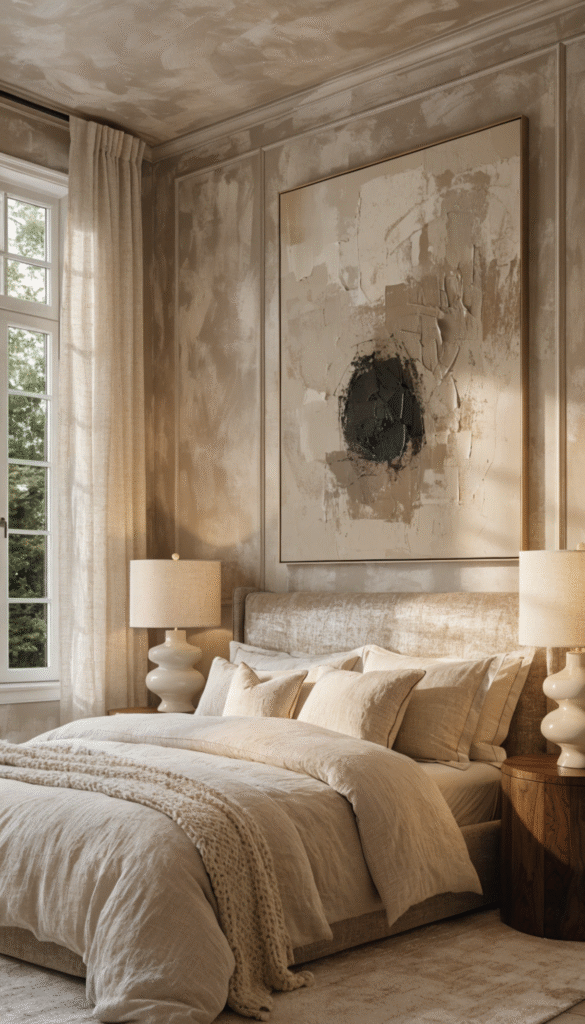
Luxury interiors are rarely characterised by bold, saturated colour used broadly across walls and furnishings. Instead, they rely on what the great colour consultant Donald Kaufman called ‘complex colour’ — hues that contain multiple undertones, that shift subtly in different light conditions, that feel simultaneously familiar and impossible to name precisely. Think of the warm off-white of aged ivory, the grey-green of sage in autumn shadow, the faded terracotta of a Venetian palazzo wall — these are colours with biography, with depth, with character.
The luxury approach to colour is typically to establish a sophisticated, restrained base palette of two to three colours, and then layer richness and interest through texture, pattern, and carefully chosen accent tones rather than through broad colour application. The walls, floors, and large upholstered pieces form the background; accessories, artwork, soft furnishings, and plants bring in the personality and the life.
5.2 The Timeless Luxury Palettes
After years of designing interiors that need to endure, retain their appeal, and continue to feel relevant across decades, I have identified a collection of colour palettes that are reliably, durably luxurious. These are not trends — they are classics, and they are classics for a reason.
The Warm Neutral Foundation
Warm whites, creams, putties, greiges (grey-beiges), and soft taupes form the most universally appealing and enduringly sophisticated base palette. Benjamin Moore’s White Dove, Farrow and Ball’s Elephant’s Breath and Hardwick White, and Dulux’s Natural Hessian are among the industry’s most specified luxury neutrals. What makes these colours work is not their neutrality per se, but the warmth within them — they read as neutral while adding an unmistakable sense of comfort and quality to a space.
The Dark and Dramatic Scheme
Deep, moody colour — used either as a full room treatment or as a feature — is a hallmark of confident, sophisticated interior design. Deep forest green, midnight navy, charcoal, and ink — these colours create interiors of extraordinary depth and intimacy. The key to making dark schemes work in a luxury context is ensuring they are paired with warm, layered lighting, rich natural materials, and considered contrast in textures and tones.
The Earthy Organic Palette
Inspired by the Wabi-Sabi aesthetic and the biophilic design movement, earth palettes of terracotta, burnt sienna, warm clay, mushroom, and rust have become defining colours of contemporary luxury. These are colours that connect us to nature, that feel instinctively grounding and warm, and that age with tremendous grace and beauty.
5.3 Texture: The Dimension That Photographs Cannot Capture
If colour is the voice of a room, texture is its warmth — the quality you only truly understand when you are physically present within a space. Texture is what turns a room from a beautiful photograph into a beautiful experience. It is what makes you want to reach out and touch, to linger, to stay.
In luxury interiors, texture is introduced through every layer of the space: the grain and movement in a stone slab, the weave of a bouclé or linen upholstery fabric, the hand-plastered quality of a limewash wall, the nubby warmth of a hand-knotted wool rug, the gentle sheen of silk cushions against the matte depth of a velvet sofa. These contrasting textures create what designers call ‘tactile richness’ — a quality of dimension and depth that you experience physically as well as visually.
The rule I always apply: in a restrained colour palette, texture must do the heavy lifting. The more limited your colour range, the greater the range of textures required to prevent the space from feeling flat and monotonous.
| “When the palette whispers, the texture must sing.” |
PART SIX: THE FINISHING TOUCHES — WHERE LUXURY IS MADE
6.1 The Philosophy of the Finishing Touch
We have arrived at the beating heart of this guide — and the title under which it lives. If the previous sections dealt with the architecture of luxury, this section deals with its soul. Because it is the finishing touches — the last five percent of any design — that create one hundred percent of the emotional impact.
I have renovated properties that were architecturally ordinary and materialised adequately, but whose finishing touches were so considered, so exquisitely chosen and positioned, that visitors universally described them as extraordinary. I have also seen the reverse: structurally magnificent spaces, floored in genuine marble and fitted with bespoke cabinetry, that felt cold and incomplete because the finishing touches had been either neglected or approached without sufficient care and knowledge.
The finishing touch is the discipline of perfecting what you have already created. It is the art of knowing what to add, what to remove, and what to simply leave alone. It requires the most confidence of all the design skills, because unlike choosing a floor finish or specifying a lighting scheme, there is no formula for it — only principle, experience, and taste.
6.2 Hardware: The Jewellery of the Home
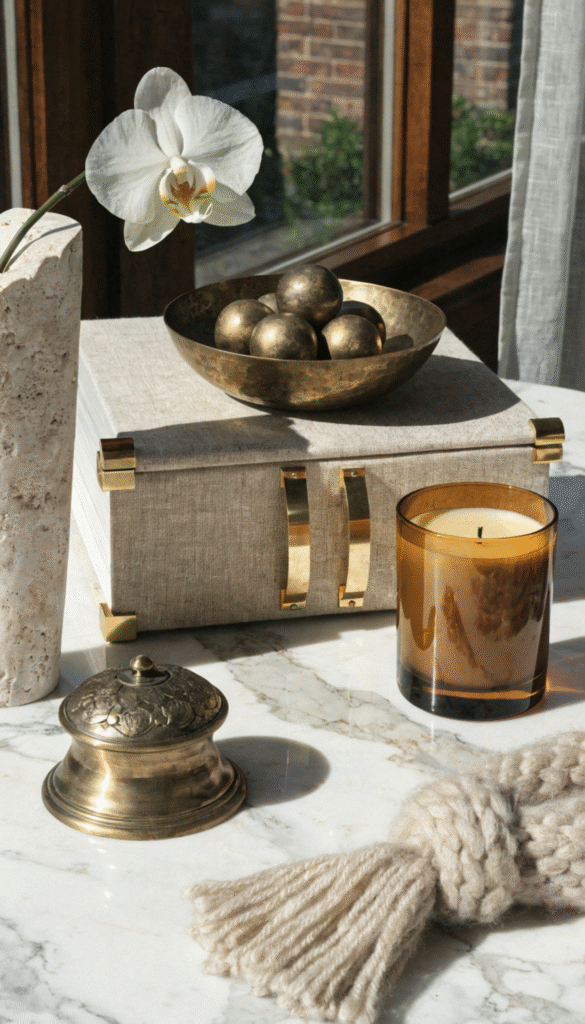
If your home is a beautifully dressed person, hardware — door handles, cabinet pulls, tapware, light switches, and hinges — is its jewellery. And just like jewellery on a person, even the most carefully composed outfit is incomplete without it being correct. Hardware is touched hundreds of times every day; it is noticed — consciously or not — every single time. It deserves careful, deliberate selection.
The three rules of luxury hardware specification are: quality over quantity, consistency over variety, and weight over lightness. In terms of quality, always choose solid metal over zinc alloy or hollow chrome — solid brass, solid stainless steel, and solid bronze are the premier choices, and you can feel the difference the moment you touch them. In terms of consistency, choose a single metal finish and apply it throughout a room or, ideally, throughout the entire home: brushed brass, brushed nickel, matte black, or polished chrome — pick one and commit. Nothing undermines a luxury interior more quickly than a mishmash of different metal finishes. And in terms of weight, choose hardware with heft: the satisfying resistance of a well-weighted door handle or the smooth action of a quality drawer pull are sensory luxuries that cost relatively little but contribute disproportionately to the overall experience of a home.
Current Luxury Hardware Finishes
- Brushed Brass / Antique Brass — warm, sophisticated, pairs with almost any palette.
- Unlacquered Brass — patinates over time for an authentically aged, artisanal quality.
- Brushed Nickel — cooler, more contemporary, pairs beautifully with white oak and grey stone.
- Matte Black — dramatic, graphic, extraordinarily elegant in the right context.
- Satin Chrome — the classic choice: timeless, versatile, effortlessly refined.
6.3 Textiles and Soft Furnishings
Textiles are the warmth of a home — literally and figuratively. They soften hard surfaces, absorb sound, add colour and pattern, and communicate comfort and care. In luxury interiors, textiles are never an afterthought; they are a primary design vehicle.
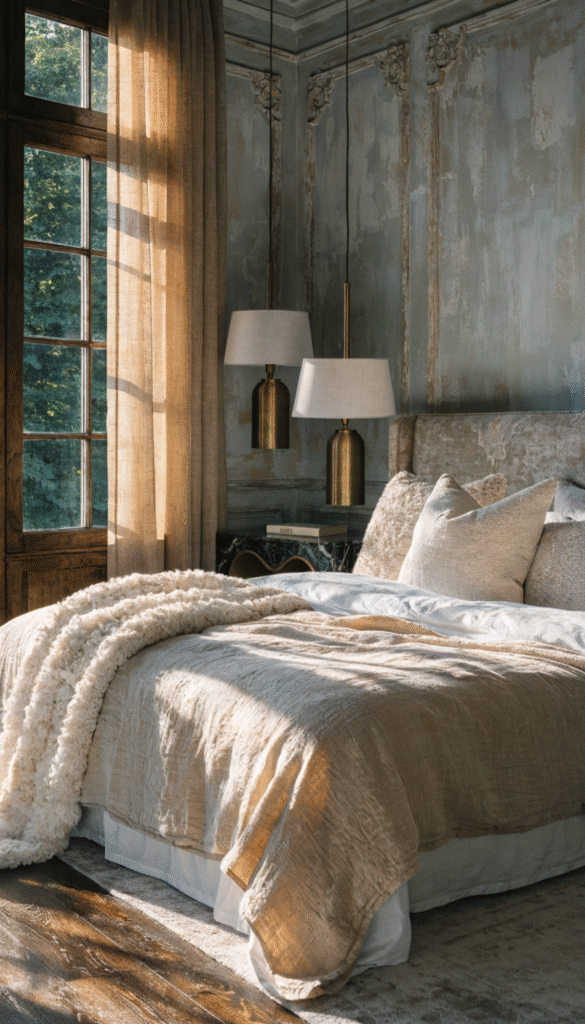
The layering principle applies here as powerfully as anywhere in design. A bed should be dressed in multiple layers: quality base linen (1000 thread count minimum for a truly luxurious sleep surface), a mid-layer throw or quilt of natural fibre, and two or three carefully chosen cushions that introduce texture and colour contrast without overwhelming the composition. The result should look effortlessly abundant — never flat, never chaotic.
For sofas and upholstered chairs, choose natural fibre fabrics wherever possible: linen, wool, cotton velvet, or bouclé. These materials breathe, develop beautiful patina with use, and have a sensory quality that synthetic alternatives simply cannot replicate. A sofa in a good quality, natural-fibre fabric will look and feel more luxurious in ten years than a synthetic lookalike fresh from the showroom floor.
6.4 Art, Mirrors, and Decorative Objects — Curation Over Collection
Art is the most personal element of any interior, and yet it is treated with the least confidence by most homeowners. The result is walls that are either bare — the space feeling unfinished and temporary — or overcrowded with disconnected pieces of varying quality that collectively add visual noise rather than beauty.
The approach I advocate is curation over collection. Rather than filling walls to demonstrate abundance, choose fewer pieces that you genuinely love and that genuinely work in the space — in terms of scale, colour, and energy — and display them with the confidence and generosity of space they deserve. A single large, powerful artwork on a feature wall will always be more impactful than six small prints arranged in a grid. Invest in original art when you can: even a small original painting by an emerging artist carries more soul, more story, and more investment value than a high-quality reproduction.
Mirrors are among the most powerful finishing tools available to an interior designer. A well-placed mirror doubles light, creates the illusion of space, and introduces a dynamic quality to a room — it changes as the room changes, as the light moves, as people pass through. In darker rooms, hallways, and dining rooms especially, a large, well-framed mirror can be transformative.
Decorative objects — sculptures, vessels, books, collected objects from your travels and your life — are the autobiography of a home. They are what make a professionally designed space feel inhabited rather than staged. The rule here is simple: display only what you genuinely love, in odd numbers (threes and fives create more natural, dynamic arrangements than pairs or fours), and with breathing room between pieces. A beautiful ceramic bowl displayed alone on a shelf, with space around it to be appreciated fully, is more powerful than the same bowl lost among ten other objects.
| “A home without art is a body without a soul. Choose what moves you — then give it the space to move others.” |
6.5 Plants and the Power of Living Elements
No interior is truly finished — truly alive — without plants. This is not a decorating trend or a lifestyle affectation; it is grounded in science. Multiple studies have confirmed that the presence of living plants in an interior improves air quality, reduces stress, boosts mood, and increases creativity and cognitive performance. These are the qualities we seek in a luxury home, and plants deliver them at a remarkably modest cost.
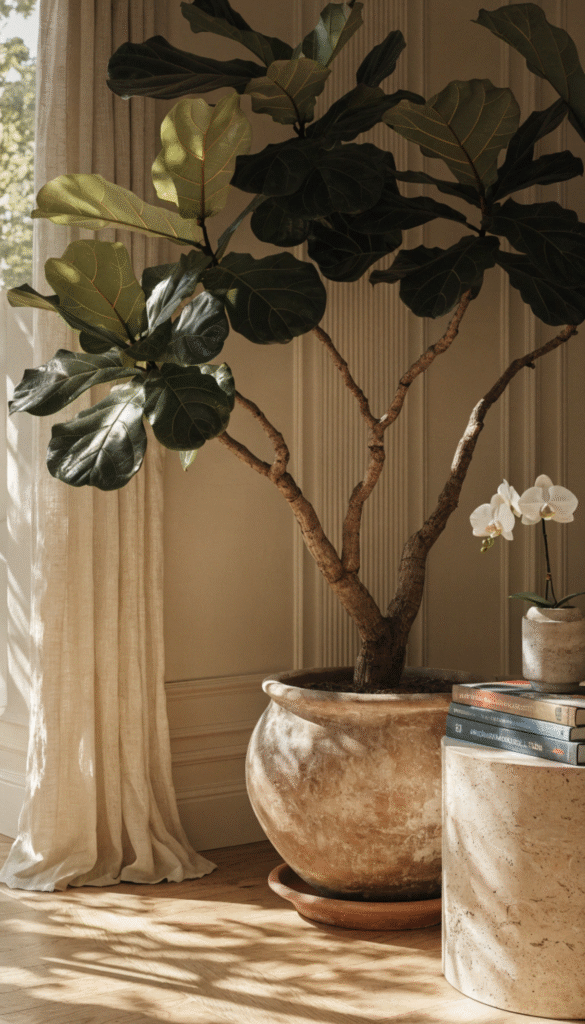
In luxury interiors, the most impactful plant choices are typically architectural and bold: a large Fiddle Leaf Fig or Monstera Deliciosa in a corner of a living room, a cluster of tall Kentia Palms beside a window, a dramatic Olive tree in a clay pot in an entrance foyer. These statement plants perform the same design function as a piece of large-scale sculpture — they anchor a space, add vertical interest, and create a focal point that feels organic and alive.
Choose your pots with the same care you apply to hardware and accessories. Hand-thrown terracotta, matte ceramic in organic shapes, brushed concrete, and woven rattan are all materials that complement a luxury interior without competing with it.
PART SEVEN: ROOM-BY-ROOM LUXURY — THE COMPLETE GUIDE
7.1 The Entrance: Your Home’s First Impression
Every great story begins with a powerful opening line. In the story of your home, the entrance is that opening line. It sets the tone for everything that follows, establishes the narrative of your home’s character, and either excites or disappoints the person who crosses your threshold.
An entrance hall should accomplish three things: it should create a moment of transition — a sensory shift from the outside world to the world of your home; it should communicate the design language and aesthetic that runs throughout the house; and it should be genuinely beautiful, even if it is tiny. A well-designed entrance of twelve square metres will make more impact than a poorly designed one of fifty.
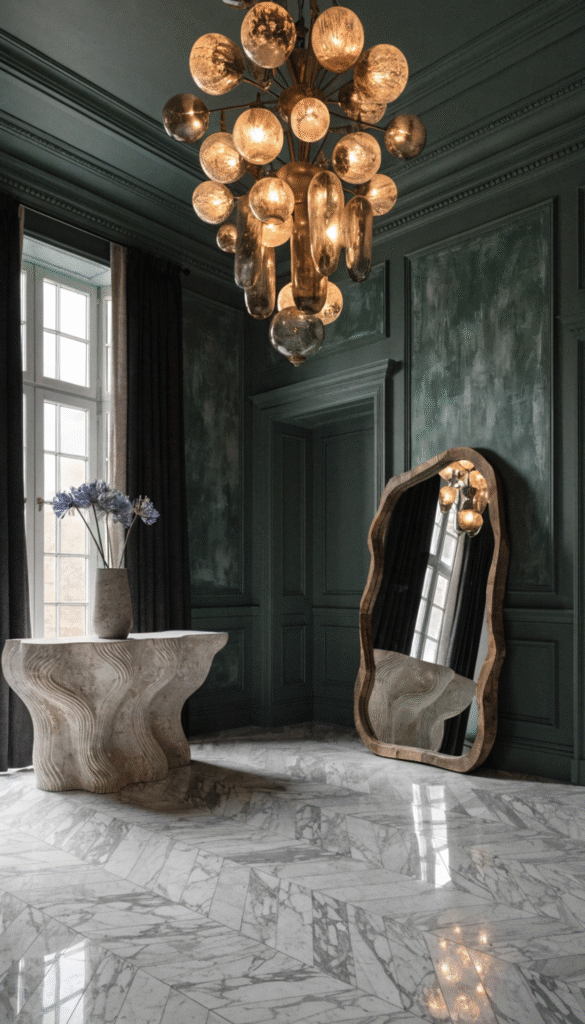
Key finishing touches for a luxury entrance: statement lighting — a chandelier or a cluster of pendants that immediately establishes the quality of the space above; a mirror — both functional and spatially generous; a console table — narrow but beautiful, displaying a lamp, an architectural object, and perhaps a small vase of fresh flowers; quality flooring — whether stone, timber, or tile, the entrance floor should be the same or better quality as the main living areas (it communicates the quality of everything beyond); and a signature scent — the luxury hotels know that scent is the most powerful memory trigger, and a home that smells beautiful makes an indelible impression.
7.2 The Living Room: Where Life Happens
The living room is the social, emotional, and aesthetic centre of the home. It is where families gather, where guests are entertained, where evenings unwind and conversations deepen. Designing it well is not a luxury — it is a responsibility.
The foundational principle of a great living room is this: it must work as both a room for active living and a beautiful composition when empty. The furniture arrangement must facilitate real conversation — no seating arrangement where chairs or sofas face a wall in isolation, away from the rest of the seating group. Conversation groupings should always face inward, ideally anchored by a central coffee table or ottoman that acts as a shared table surface and visual anchor. The television — that great enemy of thoughtful interior design — should be integrated into the architecture where possible, recessed into cabinetry or positioned above a fireplace with care taken to ensure the viewing angle is correct for comfortable use.
7.3 The Kitchen: The Heart of the Modern Home
The kitchen has evolved from a purely functional service room to the undisputed social and experiential heart of the contemporary home. In luxury property development, the kitchen is consistently the space that buyers respond to most powerfully — and the space where considered investment delivers the greatest return, both financially and in terms of daily quality of life.
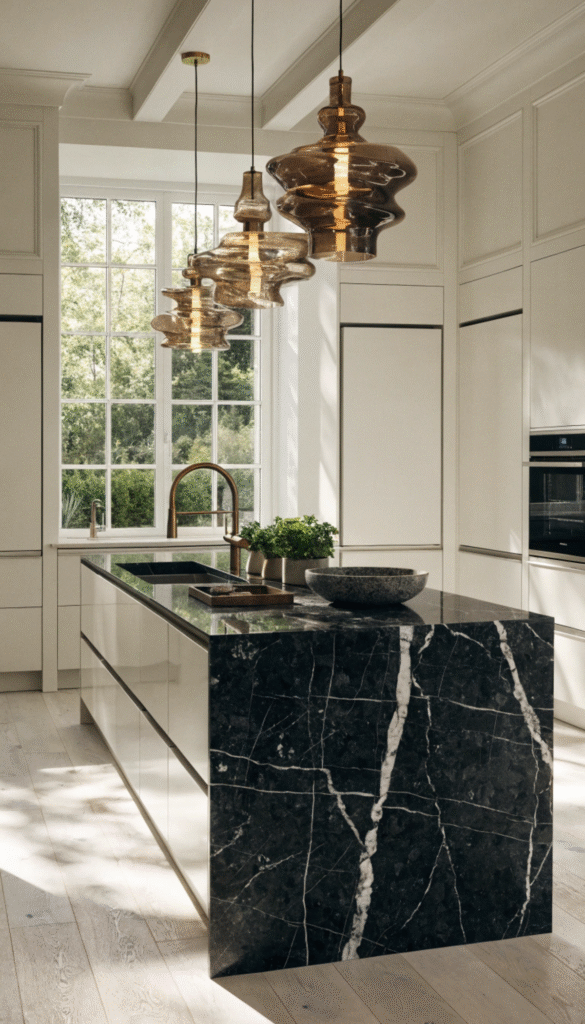
Luxury kitchen design is defined by the following principles: generous proportions with adequate working space and clear circulation paths; premium, durable surface materials — natural stone or engineered stone for countertops, premium cabinetry in solid timber or lacquered MDF with soft-close mechanisms throughout; professional-grade or professional-aesthetic appliances integrated seamlessly into the cabinetry; intelligent, layered storage with a dedicated place for everything; extraordinary lighting — task, ambient, and accent — because kitchens require the most demanding lighting conditions of any room in the house; and the finishing touches that transform a beautiful, functional kitchen into an extraordinary one: the quality of the tapware, the choice of handles, the presence of a statement pendant above the island, the artwork that hangs on the nearby wall.
7.4 The Primary Bathroom: Your Private Sanctuary
The bathroom — and in particular the primary suite bathroom — represents one of the most significant opportunities for luxury expression in any home. It is the space where you begin and end each day. It should restore you, refresh you, and make you feel cared for. At its best, it should feel like the finest suite of the finest hotel you have ever stayed in — and it should be entirely, personally yours.
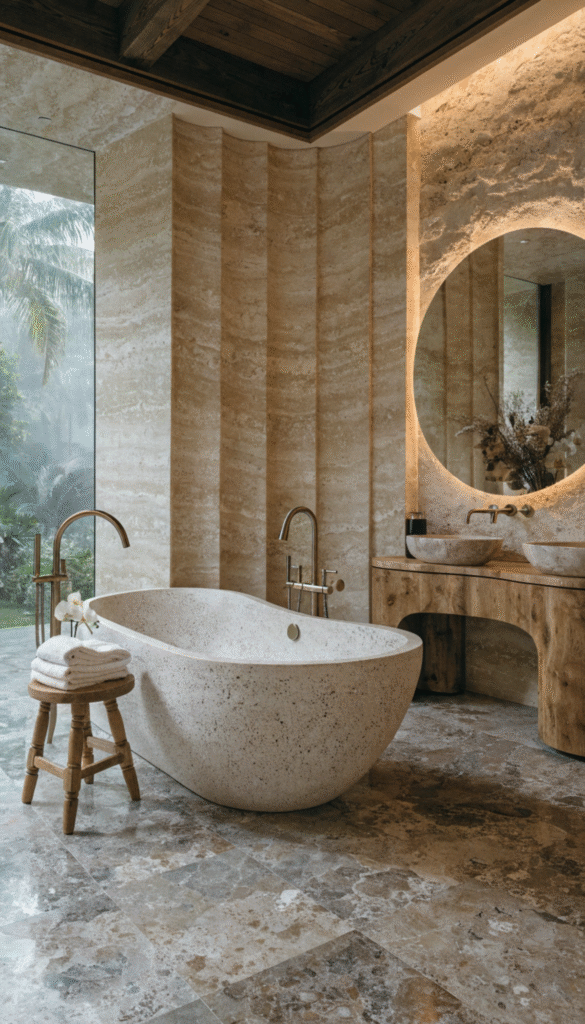
Luxury bathroom design is defined by generous space; natural materials — stone, timber, and clay rather than ceramic tile wherever possible; hotel-quality fixtures and fittings; and impeccable detail. The bath — whether freestanding or built-in — should be positioned as the architectural and emotional focal point of the room, treated like the sculpture it is. A freestanding bath positioned beside a large window, framed by natural stone walls and lit by a carefully positioned overhead fitting, is one of the most powerful luxury statements available to any interior designer.
The finishing touches in a luxury bathroom include: quality towels folded with hotel precision; a selection of beautiful, edited products on a stone or timber tray; a scented candle in a quality vessel; a live plant — even a small one — to bring organic life into the space; artwork — bathrooms are overlooked as gallery spaces, but a well-chosen framed work transforms the experience; and quality mirrors, ideally back-lit or with integrated lighting, that flatter rather than merely reflect.
PART EIGHT: THE DEVELOPER’S PERSPECTIVE — LUXURY THAT ADDS VALUE
8.1 Designing for Emotional Impact and Financial Return
As a property developer, I am always conscious of a dual responsibility: to create spaces that are genuinely beautiful and genuinely liveable, and to ensure that the investments I make in luxury design deliver measurable financial return. These two objectives are not in conflict — in fact, when luxury design is approached correctly, they are deeply aligned.
The data is clear: premium finishes, well-designed spaces, and exceptional finishing touches consistently command a price premium in the property market. Buyers and renters will pay significantly more for homes that feel considered, beautiful, and genuinely luxurious — and they will pay that premium regardless of whether they can articulate exactly what creates that quality. They feel it. They know it. And they open their wallets for it.
The highest return on investment in luxury residential development consistently comes from the kitchen and bathrooms — which confirms everything we discussed in the previous section. After these, the entrance, the primary living area, and the outdoor entertaining space are the next highest-return investments. These are the spaces that are experienced first and most vividly, and that shape the lasting impression of an entire property.
8.2 The Top Luxury Upgrades by Return on Investment
Based on my experience across multiple luxury property developments and renovations, here are the upgrades that consistently deliver the highest return relative to their cost:
- Kitchen upgrade — countertop, cabinetry, and tapware. The single highest-return renovation in residential property.
- Bathroom upgrade — primary suite. Stone surfaces, freestanding bath if space permits, quality fixtures.
- Flooring upgrade — replacing carpet or builder-grade tiles with engineered timber or natural stone throughout main living areas.
- Lighting redesign — adding dimmer switches, additional circuits, and quality decorative fittings throughout.
- Hardware replacement throughout — door handles, cabinet pulls, and tapware. One of the highest-return investments relative to cost.
- Window treatments — quality curtains hung correctly (high and long) replace all builder-spec blinds.
- Landscaping and outdoor entertaining area — kerb appeal and outdoor living are consistently significant value drivers.
- Paint quality and application — premium paint throughout, applied by a skilled tradesperson. Transformative impact at relatively modest cost.
| “The difference between a property and a lifestyle is always in the details. And the details are always worth it.” |
PART NINE: THE LUXURY HOME FINISHING CHECKLIST
Your Room-by-Room Luxury Audit
Use this checklist to audit your current home or guide your next renovation project. For each item, ask yourself: is this element present? Is it done well? If not — it represents an opportunity.
Entrance Hall
- Statement lighting fixture — not a recessed downlight, something beautiful and bold.
- Quality flooring — the same or better than the main living area.
- Large mirror in a quality frame.
- Console table or built-in feature with decorative styling.
- Fresh or living flowers/plants.
- Signature scent — candle, diffuser, or room spray.
- Artwork — even in a small entrance.
Living Room
- Correctly proportioned furniture — large enough for the space.
- Rug large enough to anchor all major seating pieces.
- Layered lighting — ambient, task, and accent on separate dimmers.
- Statement decorative light fitting.
- Curtains hung at ceiling height, breaking on the floor.
- Curated coffee table or ottoman styling.
- Fresh flowers or quality plant.
- Original or investment-grade artwork.
Kitchen
- Premium countertop — stone preferred.
- Quality cabinet hardware — solid metal, consistent finish.
- Statement pendant above island or breakfast bar.
- Under-cabinet task lighting.
- Premium tapware — brushed brass, matte black, or quality chrome.
- Fresh herbs or a quality plant on the bench or windowsill.
- Artwork or sculptural object visible from main kitchen position.
Primary Bedroom
- Upholstered or quality bedhead — full headboard reaching toward ceiling.
- Layered bed linen — minimum three layers of quality natural fibre.
- Bedside table lamps or wall-mounted reading sconces.
- Curtains or blinds — quality window treatment hung at ceiling height.
- Mirror — full-length, quality frame.
- Personal, curated styling on bedside tables.
- Artwork above bed or on facing wall.
Primary Bathroom
- Stone or premium surface material — minimum on vanity top and shower.
- Quality tapware and fixtures — consistent metal finish throughout.
- Back-lit or well-positioned vanity mirror.
- Hotel-quality towels — properly folded and displayed.
- Curated bench/shelf styling — tray with quality products, candle, plant.
- Artwork — at least one framed piece.
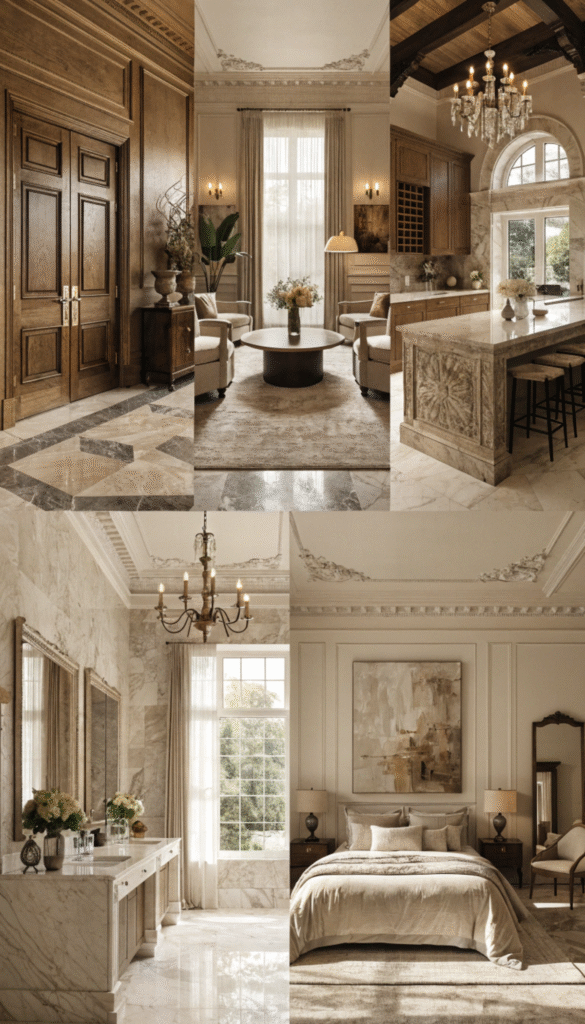
THE FINAL WORD: YOUR HOME IS YOUR MASTERPIECE
You have reached the end of this guide — but you are, in truth, standing at a beginning. You now hold in your hands a complete framework for understanding, creating, and refining luxury in your home. You understand that luxury is not about excess — it is about intention. You know the five pillars. You understand proportion, materials, lighting, colour, and the irreplaceable power of the finishing touch.
But knowledge, on its own, changes nothing. What changes your home — what transforms it from a place where you live into a place you love — is action. Begin today. Begin small if you must: rehang your curtains at ceiling height. Replace one set of cabinet handles. Buy one truly beautiful plant for your entrance. Light a quality candle in the room where you spend most of your evenings. These small acts, performed with intention and care, begin a process that gathers momentum and compound interest.
I have designed homes for clients who started with almost nothing — spaces that were bare, tired, and defeated — and watched them become extraordinary. I have seen the pride and the joy on the faces of homeowners who walk through their transformed front door and feel, perhaps for the first time, that their home reflects who they truly are and what they truly value. There is nothing in my professional life more rewarding than that moment.
Your home is your canvas. You are the artist. And luxury — real luxury — is always available to those who know how to look for it, how to create it, and how to live it.
| “The details are not the details. They make the design.” — Charles Eames |

Fene Radebe is the founder of Lifestyle Leaders Hub, a lifestyle destination covering home décor, fitness, food, beauty, and fashion. A seasoned property developer and interior designer, Fene curates expert-driven content to help readers elevate their everyday lives with purpose and style.