
The Luxury Design Details That Make a House a Masterpiece
What separates a beautiful home from an unforgettable one is almost never the square footage. It is the details.
Walk into a truly extraordinary home and something shifts. The air feels different. Every surface speaks with intention. This is not a coincidence and it is certainly not luck. The world’s most celebrated interiors — from a Mayfair townhouse to a Malibu clifftop residence — share a very specific vocabulary of design details that most people admire but few know how to name.
Statement ceilings. Bookmatched marble. Bespoke millwork. These are the elements that interior architects and top-tier designers obsess over because they understand something fundamental: the details are the design. A generic shell dressed in expensive furniture will always read as expensive but never as masterful. The difference lies in the bones.
This guide breaks down the luxury design details that consistently define the world’s finest residences — and explains exactly why each one works.
| 73% of luxury buyers cite architectural details as a top purchase driver | 40% premium on homes with bespoke millwork & stone floors in prime markets | $18K+ average cost of hand-applied Venetian plaster per room |
Statement Ceilings: The Fifth Wall Finally Gets Its Due
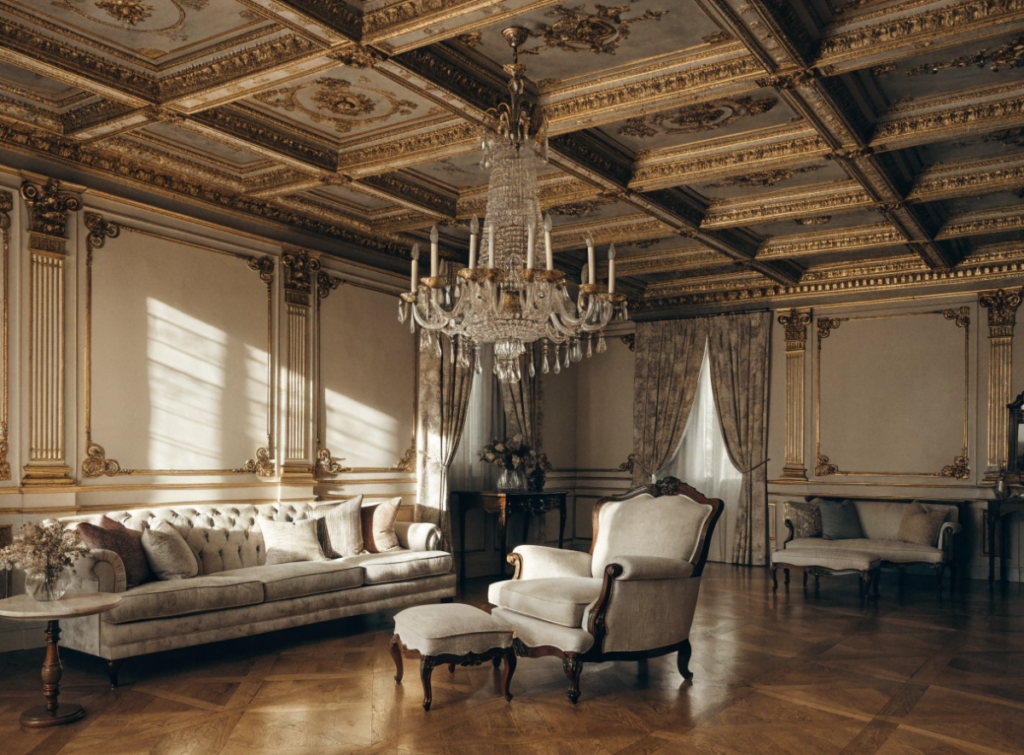
For decades, the ceiling was an afterthought. A white plane overhead that existed simply to close the room. The finest designers never saw it that way, and now the rest of the world is catching up. The statement ceiling has become the defining signature of luxury residential design in the 2020s precisely because it requires genuine architectural commitment.
Coffered ceilings — those recessed grid panels borrowed from Renaissance palaces and Georgian country houses — add immediate visual weight and structural gravitas to any room. When executed in plaster with gilded reveals, they communicate permanence in a way that no piece of furniture ever could. When interpreted in lacquered walnut or ebonized oak, they deliver something more contemporary and equally compelling.
Beyond coffers, the options are extraordinary. Hand-painted fresco ceilings remain the ultimate statement in European classical design. Fabric-wrapped panels offer warmth and acoustic control in media rooms and master suites. Barrel-vaulted ceilings in entrance halls create cathedral-like drama that sets the emotional tone for an entire home before a guest takes five steps inside.
“The ceiling is the first thing you do not consciously notice and the last thing you forget.”
What separates a truly successful statement ceiling from a theatrical miscalculation is scale and proportion. Every element must be sized to the room it inhabits. A coffered grid that looks imposing in a 5-metre-high salon will feel oppressive in a standard room. This is where the expertise of a skilled designer becomes non-negotiable.
- Coffered ceilings with plaster or timber panels are the most enduring luxury choice
- Hand-applied Venetian plaster or limewash adds texture and depth for far less than a structural intervention
- Integrated cove lighting around a perimeter cornice adds architectural dimension without weight
- Barrel vaults and groin vaults belong in reception rooms and formal dining spaces
Marble Floors: Where Natural Geology Becomes Interior Poetry
There is no flooring material that carries the weight of history, luxury, and sheer visual power that marble does. From the Parthenon to the Palazzo Pitti, stone floors have signaled power and permanence across every civilization that has ever built for the ages. In contemporary luxury residential design, marble remains completely irreplaceable.
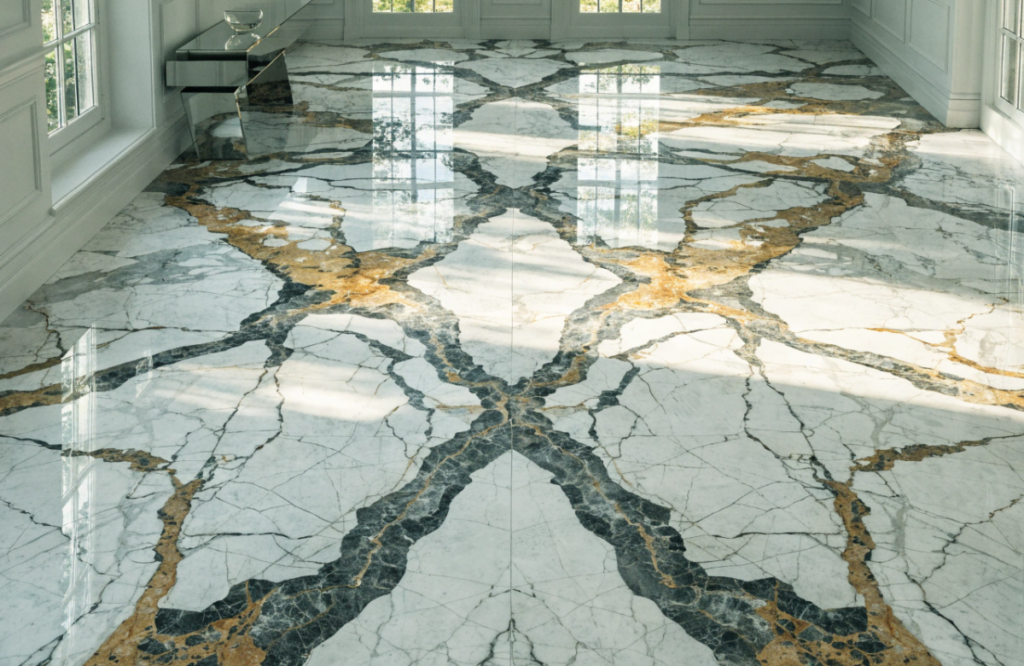
What most people see as simply a beautiful floor is, to a skilled designer, an opportunity for extraordinary artistry. The technique of bookmatch — where slabs are opened like pages of a book to create mirror-image veining patterns — transforms geology into something that looks deliberately composed. In entrance halls and great rooms, bookmatched marble in large format slabs reads as almost painterly.
The choice of stone matters enormously. Calacatta marble from the Apuan Alps in Tuscany is the prestige standard — its white ground and dramatic grey and gold veining make it the most photographed luxury floor material on earth. Statuario offers a more tightly veined, graphic quality. Nero Marquina — deep black with crisp white veining — delivers maximum drama. Cipollino with its green waves suits more idiosyncratic, richly layered interiors.
Pattern choices compound the impact. Herringbone and chevron speak to classical European tradition. A simple grid of large-format slabs reads as boldly contemporary. Opus sectile — the ancient Roman technique of cutting stone into decorative geometric shapes — represents the pinnacle of craftsmanship and remains one of the most expensive decorative floor treatments available.
- Calacatta, Statuario, and Arabescato are the three most coveted white marbles in residential luxury design
- Slab size matters: larger format tiles read as more luxurious and more contemporary
- Bookmatch veining in hallways and master baths creates a gallery-quality focal moment
- Heated marble floors are now standard in any top-tier specification
- Honed finishes are increasingly preferred over polished in residential applications — more forgiving and more refined
Bespoke Millwork & Paneling: The Art of Walls That Work
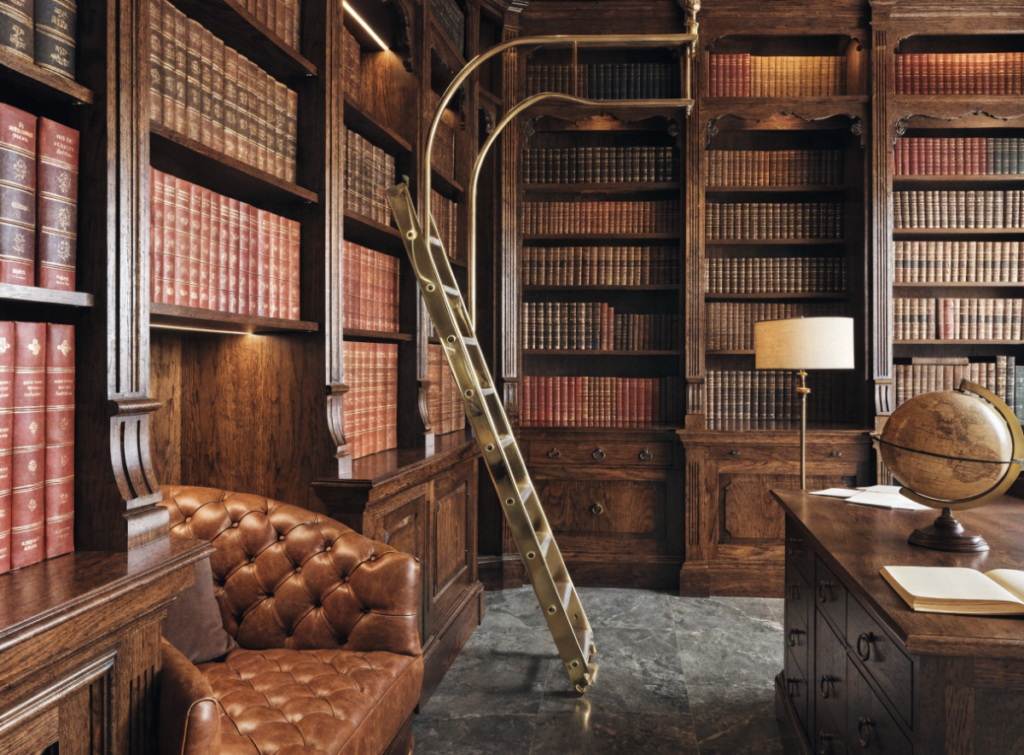
Nothing communicates ‘this was designed specifically for this house’ more fluently than bespoke millwork. Built-in cabinetry, wall paneling, integrated bookshelves, custom door casings and architraves — these are the elements that lock a room together and make it feel architecturally resolved rather than assembled from pieces.
The finest examples of architectural millwork share one quality: they look as though they have always been there and could not exist anywhere else. That sense of inevitability is extremely hard to achieve and extraordinarily expensive to execute. It requires a designer who understands proportion deeply, a craftsman who works to fractions of a millimeter, and a client willing to invest in something that will outlast furniture trends by several decades.
In contemporary luxury design, the dominant material is American black walnut — its rich, straight grain photographs beautifully and ages even better. For more classical or European interiors, painted millwork in off-white, deep navy, or forest green creates formality without austerity. Lacquered finishes in bold colors are the choice of designers who want a room that stops conversation the moment someone walks in.
The most compelling trend in luxury millwork right now is integration. Doors that disappear into paneled walls. Television screens hidden behind fabric panels that slide on invisible tracks. Kitchens where appliances vanish behind seamless cabinetry fronts. The effect is a home that appears to need nothing because everything has already been accounted for.
“A room with exceptional millwork tells you immediately that money is the least interesting thing about the person who lives here.”
- Floor-to-ceiling integrated bookshelves are the single most requested luxury addition in residential projects globally
- Hidden doors within paneling — known as jib doors — are experiencing a major revival
- Fluted wood panels add texture and movement without additional color
- Painted millwork in two tones (upper and lower) references Georgian and Regency tradition
Lighting Architecture: The Invisible Luxury Most People Miss
Amateur designers buy light fittings. Professional designers design lighting. The distinction is enormous and visible the moment you experience both. In a truly exceptional home, the lighting layers — ambient, task, accent, and decorative — work together so seamlessly that no individual source announces itself. The room simply glows with a quality of light that feels simultaneously theatrical and completely natural.
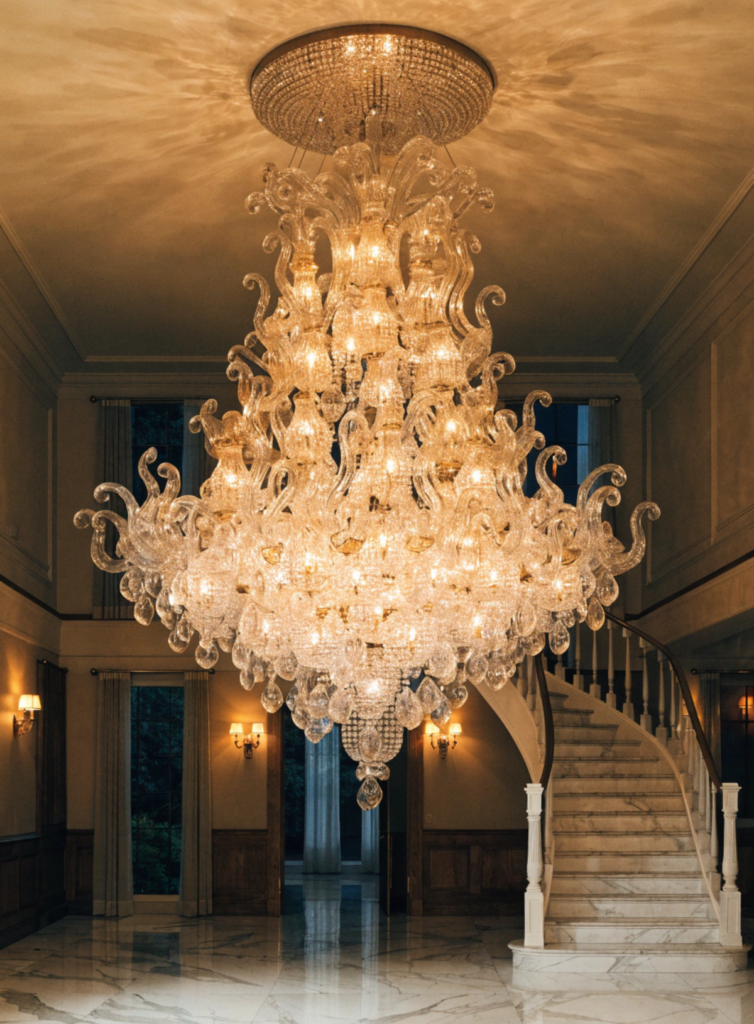
The chandelier is the anchor point of luxury lighting design. In a grand entrance hall or formal dining room, a statement chandelier does not just provide light — it defines the volume of the space, establishes the scale of everything else in the room, and operates as the visual equivalent of a full orchestra. Murano glass chandeliers from Venetian masters, rock crystal designs from the great French ateliers, and contemporary sculptural pieces from leading design studios represent the full spectrum of what is currently possible at the highest level.
But a great chandelier in a badly lit room is like a painting in a dark corridor. The architecture of light matters far more than any single fitting. Recessed fixtures with warm-toned LEDs at low colour temperature — 2700K to 3000K — create the flattering, rich quality of light that characterizes every great hotel and every great private home. Dimmer control on every circuit is non-negotiable. The ability to shift from a bright, functional daytime environment to a deeply atmospheric evening setting transforms how a home feels and how people behave within it.
- Warm white LED at 2700K matches the quality of incandescent light and is now the luxury standard
- Picture lighting on artwork and sculpture adds gallery-quality atmosphere to any room
- Cove lighting above cornices creates a floating ceiling effect and flatters room proportions
- Under-stair lighting and illuminated treads in stone add drama to any circulation space
- Every circuit in a luxury home should be on individually dimmable control
Luxury Kitchen Design: Where Functionality Meets Sculptural Precision
The luxury kitchen has undergone a radical transformation over the past decade. What was once a highly functional but visually subordinate space has become the room that sells houses and defines lifestyles. In London, New York, Sydney, and Singapore, the kitchen in a prime residential listing receives as much attention as any reception room — and the design details that distinguish extraordinary from merely expensive are very specific.
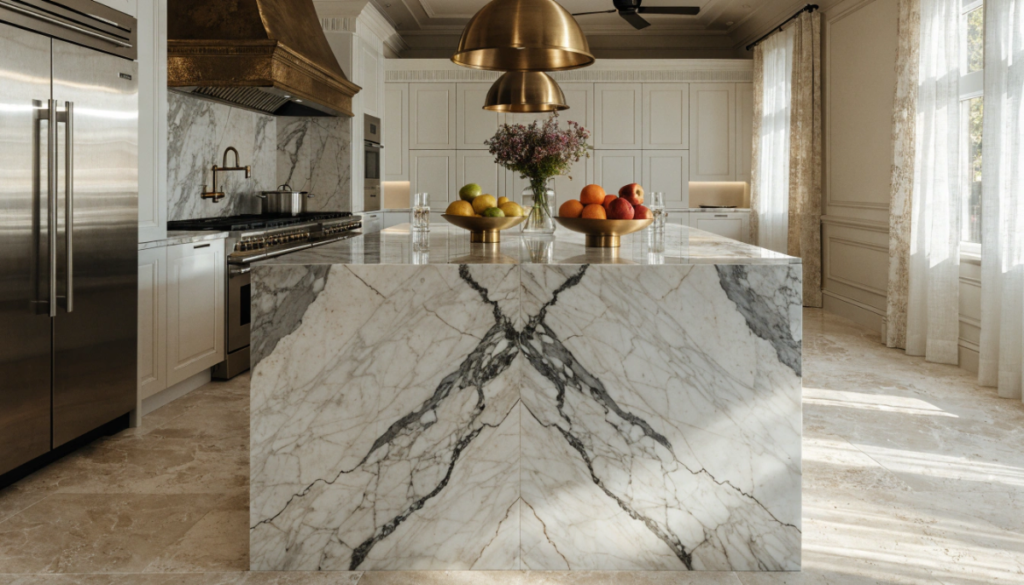
The statement island is the centrepiece. In the finest kitchens, the island is not simply a preparation surface — it is a sculptural object in bookmatched stone that functions as the visual anchor of the entire room. Waterfall edges — where the stone continues from the countertop vertically down the sides — create a monolithic, gallery-quality presence. Materials of choice right now include Patagonia quartzite with its ethereal white and grey cloud patterning, Nero Marquina for dark drama, and the perennially coveted Calacatta for timeless elegance.
Professional-grade appliances — Sub-Zero, Wolf, La Cornue, Gaggenau — are expected at this level. What separates truly exceptional specifications is how invisible they are. Integrated panel-ready refrigerators and dishwashers that disappear into cabinetry fronts, induction surfaces that appear only as smooth stone, and extraction systems that work silently through ceiling cassettes transform the working kitchen into something that looks more like a contemporary art installation than a room where food is cooked.
- Waterfall stone islands in bookmatched quartzite or marble are the defining luxury kitchen statement
- Fully integrated appliances hidden behind cabinetry panels elevate any kitchen from expensive to truly exceptional
- Unlacquered brass or aged bronze hardware ages beautifully and commands attention
- Under-cabinet lighting in warm white reveals stone texture and makes a working kitchen feel like a gallery
Steel-Frame Windows & Oversized Doors: When the Frame Becomes the Feature
The windows and doors of a luxury home are its grammar — the structural elements that define rhythm, proportion, and the relationship between inside and out. Yet they are consistently underinvested by developers and overlooked by buyers who are dazzled by surface finishes before they look up or across a room.
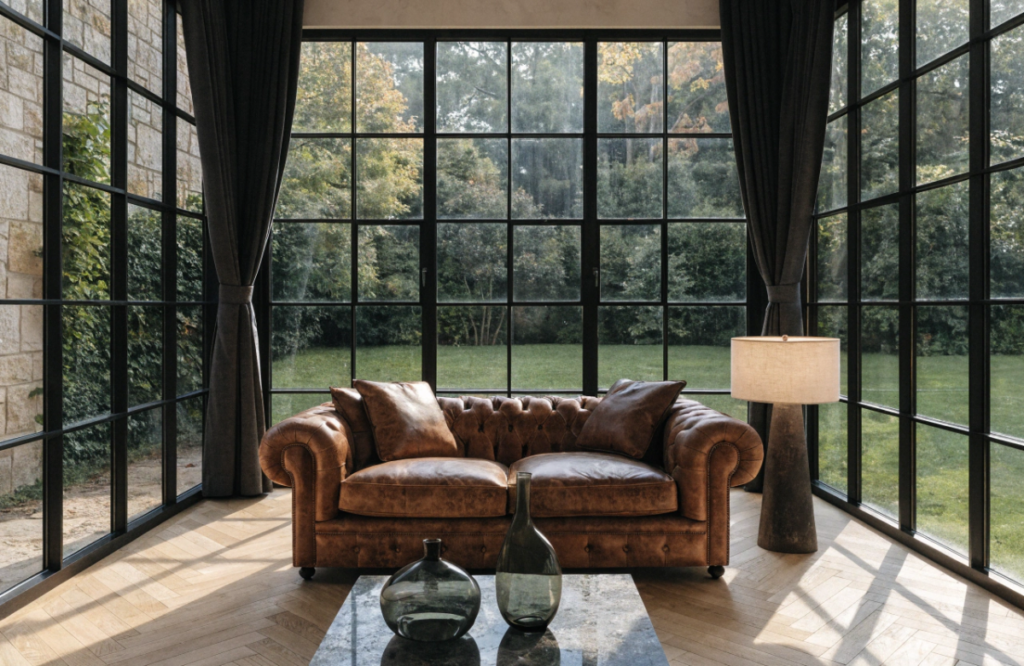
Steel-frame windows in the Crittall tradition have become one of the most powerful signatures of contemporary luxury design. Their slender profiles allow maximum glazing area while the dark frames add graphic architectural contrast against pale stone and plaster interiors. In a period house, they signal a sophisticated interplay of old and new. In a new build, they provide immediate character that mass-market aluminium windows categorically cannot achieve.
Door height is one of the single most impactful and affordable upgrades available. Standard doors in residential construction are typically 2.1 metres. Increasing door height to 2.7 or 3 metres — or installing full floor-to-ceiling pivot doors — dramatically elevates the sense of space and luxury without changing the footprint of a room by a single centimeter. The psychological effect of a tall door is immediate and universal. Every person who opens it feels, for a moment, that they are entering somewhere important.
- Crittall-style steel windows in black or dark bronze are the most distinctive luxury window choice available
- Pivot doors in stone, timber, or steel make architectural statements at every threshold
- Increasing internal door height from standard to 2.7m costs less than most furniture and delivers more visual impact
- Flush skirting boards and door architraves create a seamless contemporary look increasingly favored in luxury interiors
The Detail Is the Design
What the finest homes in the world share is not size, and it is certainly not a price tag. It is intentionality — the commitment to resolve every surface, every threshold, every plane of the room with the same rigor and care that an architect brings to the building as a whole. A statement ceiling that changes how a room feels. A marble floor that rewards every glance downward. Millwork that makes a wall disappear or define itself completely.
These are not decoration. They are architecture. And the difference between a house that is expensive and a house that is extraordinary almost always comes down to how many of these details were executed with genuine mastery rather than approximated with good-enough alternatives.
Whether you are designing a primary residence, a pied-a-terre, or an investment property in a prime global market — London, New York, Dubai, Sydney, Singapore, or Paris — the details covered here are the ones that hold their value longest, photograph most compellingly, and produce the most visceral emotional response in everyone who experiences them. That, in the end, is what luxury design is actually for.