
(And How to Fix Every Single One of Them)
You walk into a living room and something feels off. The furniture is all there. The walls are painted. There is even artwork on display. Yet somehow, the space feels flat, uninspired, or worse, cheap. Sound familiar? You are not alone. This is one of the most common frustrations homeowners and renters face across the United States, the United Kingdom, Canada, Australia, and beyond.
The truth is that a living room does not need a six-figure renovation budget to look luxurious and intentional. What it needs is an understanding of the subtle but powerful design principles that separate a room that feels polished from one that feels put together in a hurry.
In this guide, we are going to walk through the ten most common living room mistakes that quietly cheapen a space and, more importantly, exactly how to fix them. Whether you rent an apartment in London, own a townhouse in Toronto, or are decorating a newly purchased home in Sydney, these fixes are practical, budget-conscious, and genuinely transformative.
“Your living room tells a story the moment someone walks through your door. Make sure it is a story worth telling.”
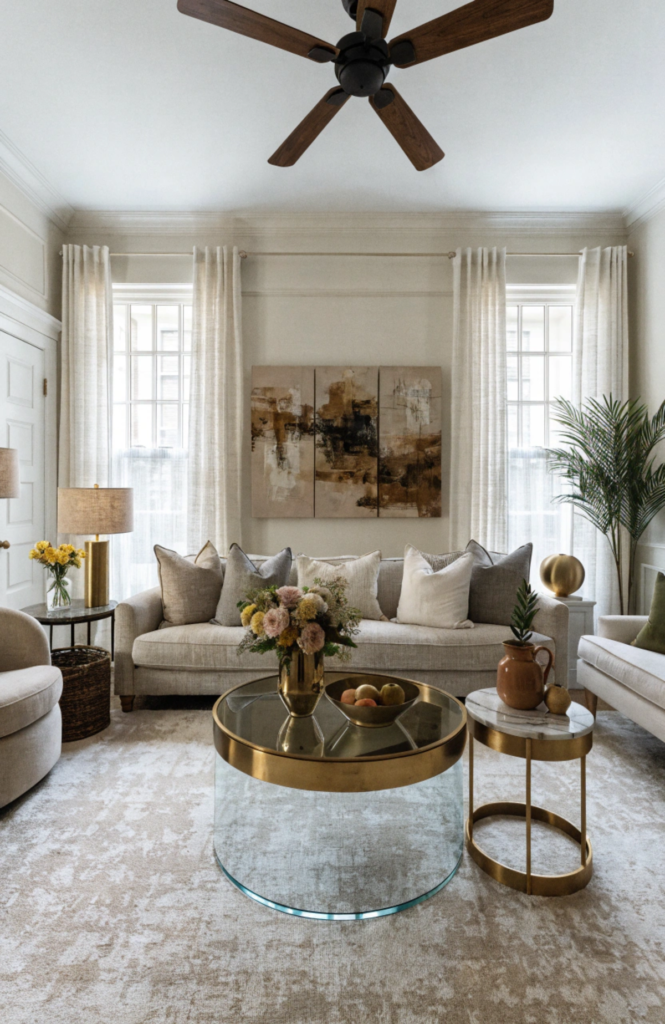
Mistake #1: Hanging Your Artwork Too High
Walk into almost any home and you will find the same error repeated on virtually every wall: artwork hung so high it feels like it belongs in an airport terminal. This single mistake is responsible for more visual disconnection than almost any other decorating choice.
The reason this happens is instinctive. People assume that higher means more visible, more dramatic, more grand. In reality, the opposite is true. When art is hung too high, it floats away from the furniture and the people in the room, creating a visual gap that makes the entire wall feel unsettled.
Why It Cheapens the Room
When there is too much wall visible between your sofa and your artwork, the room loses cohesion. The eye does not know where to settle. The wall feels bare even when something is hanging on it. The result is a space that looks assembled by someone who was not quite sure what they were doing.
Interior designers follow a rule that art should hang so the center of the piece sits at approximately 57 to 60 inches from the floor. This is eye level for the average adult standing up. In a seating area, however, you want to go a little lower because the viewer is seated. A good benchmark is to leave between 6 and 12 inches of space between the top of your sofa and the bottom of the artwork.
THE FIX:
Rehang every piece of art in your living room so the center sits at 57 to 60 inches from the floor. In seating areas, leave only 6 to 12 inches between the furniture and the artwork. Use a paper template taped to the wall to find the perfect position before you put a single nail in.
Mistake #2: Choosing a Rug That Is Too Small
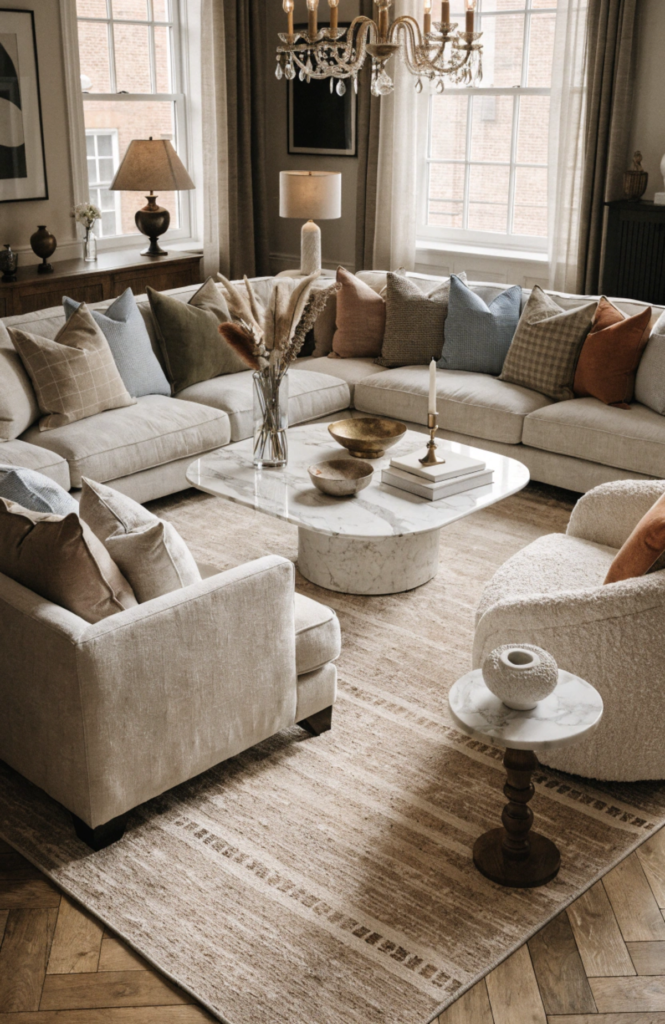
If there is one mistake that interior designers point to more than any other, it is the undersized rug. Walk into a room where the rug barely peeks out from under the coffee table and you will immediately feel that something is wrong, even if you cannot immediately name it.
A rug that is too small creates what designers call the postage stamp effect. Instead of anchoring the seating arrangement and giving the room a sense of defined, intentional space, a tiny rug makes the furniture look like it is floating on a sea of bare floor. The room loses its warmth, its intimacy, and its sense of being a deliberate design.
Getting the Size Right
In a standard living room, your rug should be large enough for all the front legs of your sofa and chairs to sit on it comfortably. In an ideal scenario, all four legs of every piece of furniture in the seating area rest on the rug. For most living rooms, this means you need a rug that is at least 8 by 10 feet, and in larger rooms, a 9 by 12 foot rug is even better.
Before you go rug shopping, use painter’s tape on your floor to mark out different sizes. This simple step saves people from making expensive mistakes. When you lay that tape down and stand back, the size that looks right in your real space is almost always larger than what you originally imagined.
THE FIX:
Always size up when it comes to rugs. Use painter’s tape to map out your rug dimensions on the bare floor before purchasing. Aim for all front legs of the sofa and chairs to sit on the rug. If your budget is limited, a larger rug in a simpler material always looks better than a small rug with a premium pattern.
Mistake #3: Relying Only on Overhead Lighting
Lighting is the single most underappreciated element of interior design, and nowhere is this more evident than in the living room. The default approach for most people is to flip on the overhead light and call it done. The result is a room that feels harsh, flat, and strangely institutional, like a waiting room or an office breakout area.
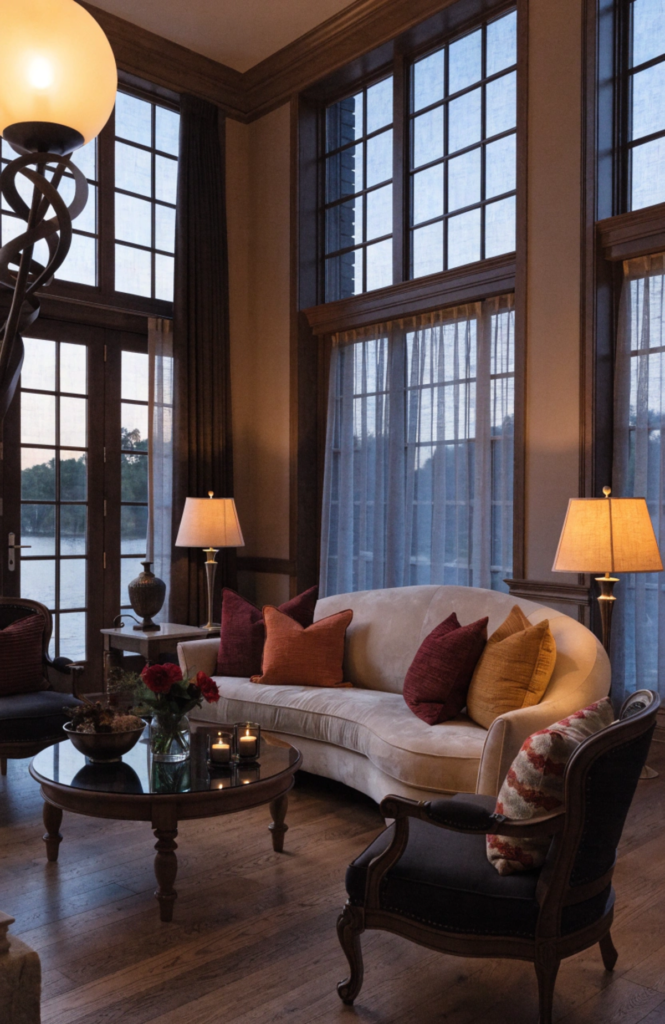
Great lighting is layered. Designers think in terms of three distinct layers: ambient lighting, which provides general illumination; task lighting, which serves a functional purpose such as reading; and accent lighting, which draws attention to specific features, artwork, or architectural elements. A living room that relies only on overhead lighting has just one layer, and it is the least flattering one.
The Power of Layered Lighting
Think about the rooms that feel most inviting to you, whether in a beautifully designed hotel lobby, a stylish restaurant, or a friend’s home that always seems to radiate warmth. In every case, those spaces use multiple light sources at varying heights. There are floor lamps, table lamps, candles, perhaps LED strips behind the television or under a console table.
This variety of sources creates depth, casts softer shadows, and makes the room feel like a place where real life happens rather than a space waiting to be photographed for a real estate listing.
THE FIX:
Add at least three light sources in your living room beyond the overhead fixture. Place a floor lamp in a corner, add table lamps on end tables, and consider under-shelf or LED strip lighting for architectural interest. Use warm bulbs with a color temperature of 2700K to 3000K for a cozy, inviting atmosphere. Dimmer switches are one of the best and most affordable upgrades you can make.
Mistake #4: Choosing the Wrong Sofa Scale
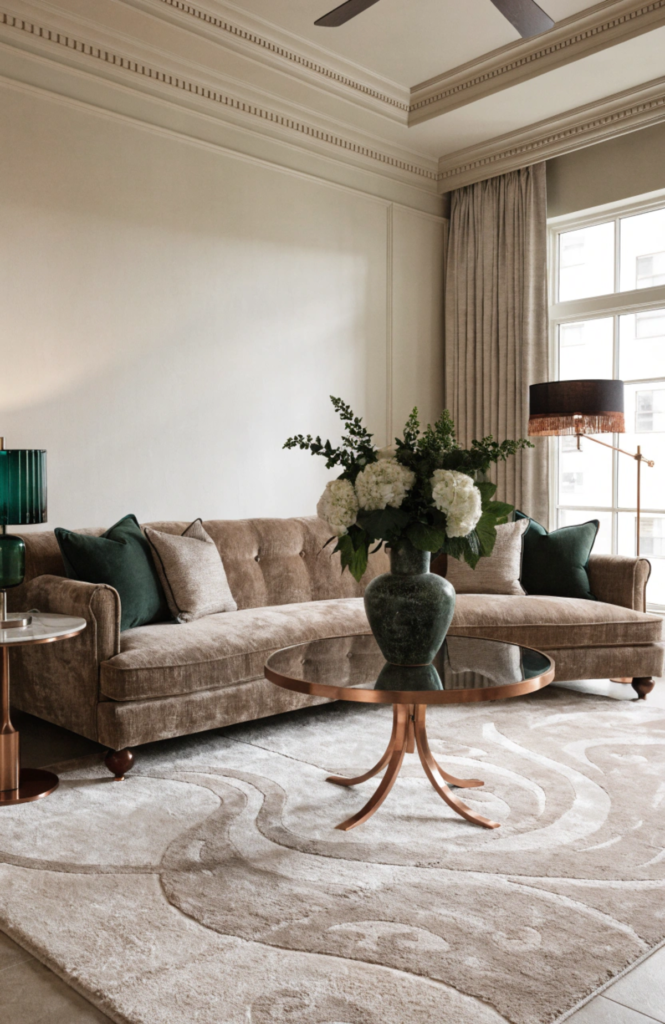
The sofa is almost always the most significant financial investment in a living room, which is why it is so disheartening when it is the wrong size for the space. A sofa that is too large crowds the room and makes movement feel uncomfortable. A sofa that is too small looks like it was borrowed from another, much tinier room.
Scale is one of those concepts that sounds abstract until you see it done wrong. When a massive sectional sofa is crammed into a modest apartment living room, everything else in the space shrinks in comparison, making the room feel cluttered and visually exhausting. Conversely, a compact two-seater sofa in a generous, high-ceilinged room simply looks lost.
Measuring Before You Buy
The rule of thumb is that your sofa should take up approximately two thirds of the wall it sits against. This creates a sense of proportion that feels balanced. You should have at least 18 inches of walkway around the sofa on each side that faces a traffic path, and a distance of roughly 18 inches between the sofa and the coffee table for comfortable legroom.
Always measure your room and the doorways before purchasing. More sofas have been returned because buyers failed to check whether they would fit through a front door than for any other reason.
THE FIX:
Measure your room carefully before sofa shopping. Aim for your sofa to fill roughly two thirds of the wall behind it. Use cardboard boxes or painter’s tape on the floor to simulate the sofa footprint before committing. Check door widths, stairwells, and hallways for delivery access. A sofa that fits the room perfectly is worth waiting for.
Mistake #5: Decorating With No Color Strategy
A room with no color strategy tends to fall into one of two traps: it is either so beige and neutral that it feels lifeless and forgettable, or it is a riot of competing colors that leaves the eye with nowhere comfortable to rest. Both extremes communicate the same thing: nobody made a decision here.
Color is perhaps the most emotionally powerful tool in an interior designer’s toolkit. It sets mood, creates energy, influences how large or small a room feels, and can make inexpensive furniture look intentional and curated. The challenge is that most people are either afraid of color or they overuse it without a framework.
The 60-30-10 Color Rule
The classic formula that designers use is the 60-30-10 rule. This means that 60 percent of the room is covered in a dominant color, usually a neutral for the walls and large furniture pieces. Thirty percent is covered in a secondary color that complements the dominant, often seen in curtains, upholstery, or a painted accent wall. The remaining 10 percent is the accent color, the punchy, personality-driven shade that appears in throw pillows, artwork, decorative objects, and small accessories.
This ratio works because it creates visual variety without chaos. The eye has a dominant backdrop to rest on, a secondary color that adds interest, and small bursts of accent color that bring delight. Think of it as composing a sentence where the dominant color is the subject, the secondary is the verb, and the accent is the punchiest word in the sentence.
THE FIX:
Choose your dominant neutral first, then select a secondary color that sits adjacent to it on the color wheel for harmony, or directly opposite for drama. Lock in your accent color last, and keep it bold but restrained. Refer to the 60-30-10 rule every time you shop for new pieces, and your room will build itself into a cohesive whole without you even trying.
Mistake #6: Neglecting Curtain Height and Width
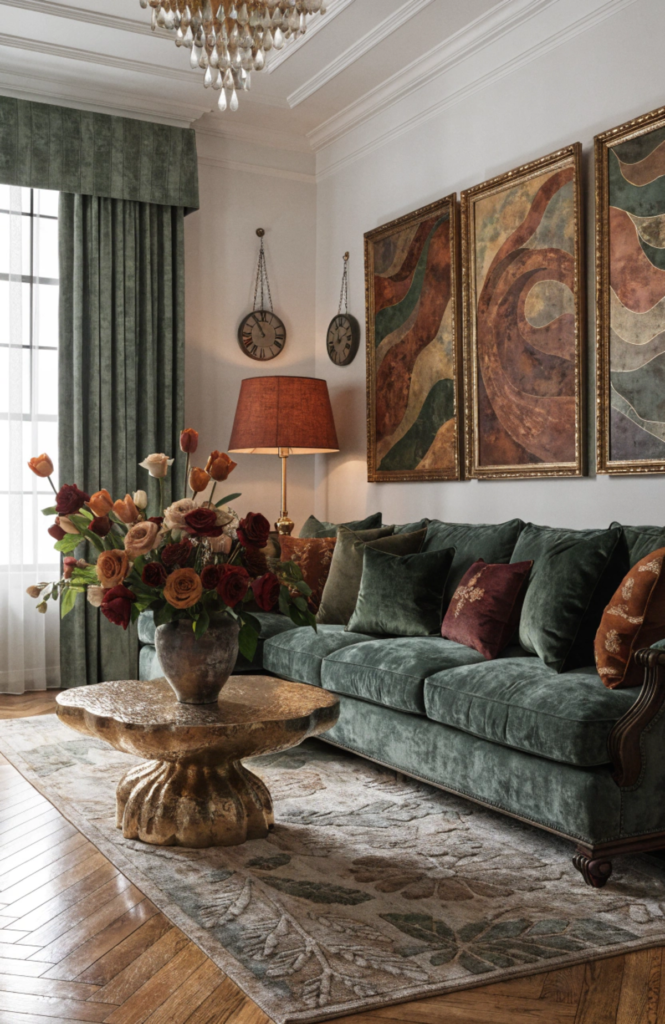
Curtains are one of the easiest and most affordable ways to transform a living room, yet they are also one of the most consistently misused elements in home decorating. The most common mistakes are hanging curtains too low and cutting them too short, both of which work against you in the most fundamental way possible.
When curtain rods are mounted directly above the window frame and the panels barely reach the windowsill, the effect is like someone cut the legs off the room. The ceilings look lower, the windows look smaller, and the whole room feels compressed and somewhat apologetic about its own existence.
The Trick That Interior Designers Swear By
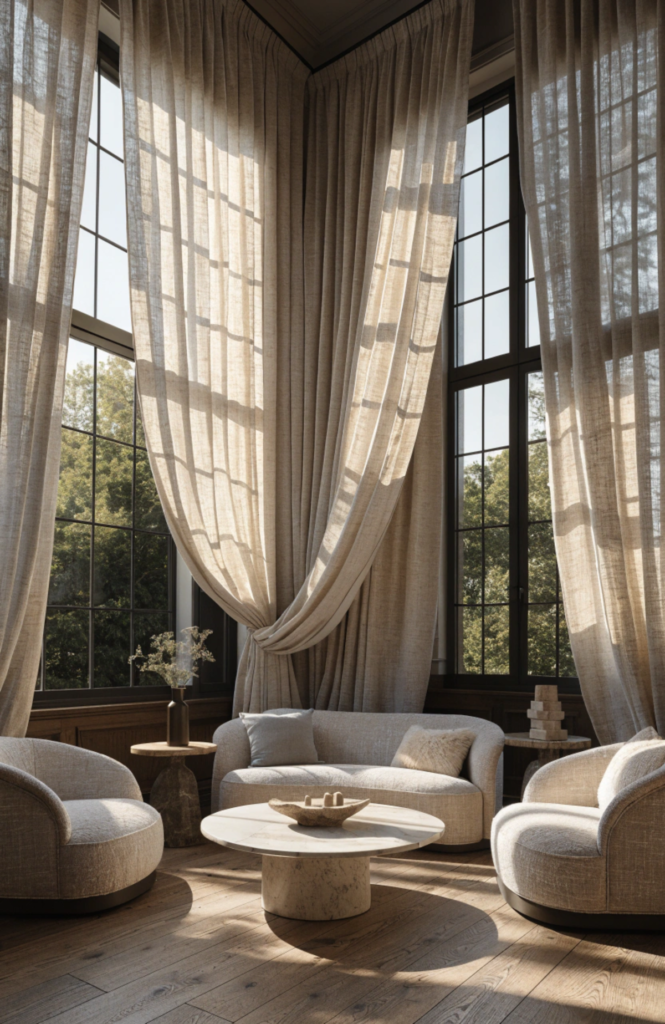
Hang your curtain rods as close to the ceiling as possible, ideally within 4 to 6 inches of the ceiling line or crown molding. Then use curtains long enough to reach the floor, with a slight puddle of fabric if you want a more luxurious look, or just kissing the floor for a cleaner, more contemporary feel.
Width matters just as much as length. Curtain panels should be wide enough so that when they are open, they stack off to the sides of the window, not covering any of the glass. This maximizes natural light and makes the window appear significantly wider than it actually is. A window that feels grand and generous makes an entire room feel more expensive.
THE FIX:
Mount your curtain rod 4 to 6 inches below the ceiling and extend it 8 to 12 inches beyond each side of the window frame. Choose curtains that drop to the floor or just beyond. Linen and velvet both read as elevated and expensive even when purchased at mid-range price points. Avoid polyester panels that look shiny and synthetic under light.
Mistake #7: Over-Cluttering Surfaces With Random Objects
There is a particular kind of living room that looks like every surface has been used as a landing pad. The coffee table has magazines, three remote controls, a candle, a bowl of keys, a few books, and a decorative tray that has lost its purpose. The shelving unit behind the sofa holds a mixture of beloved objects and items that just ended up there without any editorial intention.
Clutter is the great equalizer. It does not matter how beautiful your furniture is or how carefully you chose your rug. Clutter on every surface will override all of those good decisions and make the room feel chaotic and, ultimately, cheap. The more stuff there is with no clear arrangement or purpose, the more the room loses the sense of intention that makes spaces feel designed.
Styled Vignettes vs. Random Accumulation
The concept of a vignette is central to surface styling. A vignette is a small, intentional grouping of objects that functions as a mini composition. The most successful vignettes use the rule of three: group objects in odd numbers, vary the height of items within the grouping, and include a mix of textures such as something shiny, something matte, and something organic.
Before you restyle any surface, remove everything from it. Then reintroduce only what you genuinely love and what contributes to the visual story of the room. What you leave off the surface is just as important as what you put back on it.
THE FIX:
Clear every surface in your living room completely. Then rebuild with intention, grouping objects in odd numbers, varying heights, and mixing textures. A coffee table needs only three to five items maximum to feel styled without feeling cluttered. Store remotes in a small decorative box. Edit ruthlessly, and if you are unsure whether something deserves its spot, the answer is usually no.
Mistake #8: Ignoring the Ceiling as a Design Element
Ask most homeowners what they did with their fifth wall and you will receive a blank stare. The ceiling is the most neglected surface in almost every living room, and that is a genuine shame because it holds extraordinary potential. A room with a thoughtfully treated ceiling feels complete in a way that even the most beautifully furnished space cannot achieve if everything stops at the walls.
The default approach of white paint and a single overhead light fixture is perfectly functional, but it communicates a clear message: this room is finished but not designed. The ceiling is the first thing guests see when they step into a room, even before they consciously register the furniture or the decor. Making it interesting changes the entire experience of entering the space.
Affordable Ceiling Upgrades
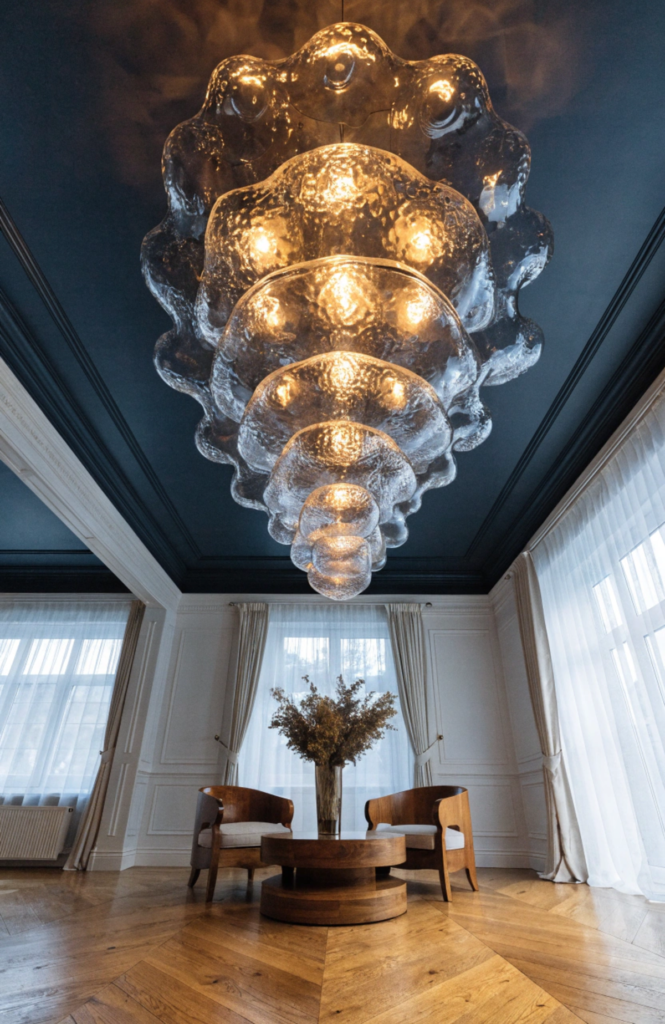
You do not need to install coffered ceilings or exposed beams to make an impact, though both are magnificent if your budget allows. One of the most budget-friendly and dramatically effective ceiling treatments is painting it a color. A deeply saturated ceiling, sometimes called a fifth wall treatment, creates a sense of enclosure and intimacy that is extraordinary. Dusty blue, charcoal, forest green, and warm terracotta all perform beautifully on ceilings.
Alternatively, a statement pendant light or chandelier creates a visual focal point overhead and pulls the eye upward, making ceilings feel higher and the room feel larger. Peel-and-stick ceiling tiles and wallpaper panels also work beautifully for renters who cannot paint.
THE FIX:
Paint your ceiling a contrasting or complementary color to create a cocoon effect. Install a statement pendant or chandelier centered in the room, sized to command attention. Even adding crown molding where the ceiling meets the wall creates an architectural detail that reads as expensive and considered. Do not let the ceiling be an afterthought.
Mistake #9: Buying Matching Furniture Sets
Walk into any large furniture retailer and you will find the temptation laid out perfectly: the sofa, loveseat, coffee table, end tables, and entertainment unit all sold as a coordinated collection. It feels like a safe choice. Everything will match. Nothing will clash. You will walk away with a complete room in one shopping trip.
Here is the problem. A room furnished entirely from a matching set almost always looks like a showroom floor sample rather than a home. Everything is too coordinated, too uniform, too obviously purchased from the same place at the same time. Real homes that feel luxurious and layered are built over time with pieces that share a sensibility but come from different sources. The slight variations in wood tone, texture, and proportion are what give a room its soul.
Building a Collected Look
Interior designers talk a great deal about the collected look, which means a room that appears to have been assembled over time with deliberate intention rather than purchased in a single afternoon. To achieve this, you mix new pieces with vintage or antique finds, combine different wood tones, blend upholstered pieces in complementary but not identical fabrics, and vary the leg styles and silhouettes of your furniture.
The result is a room that feels personal, considered, and genuinely interesting. It tells a story. That is precisely what a matching set can never do, because every piece in a matching set is telling the same story in the same voice at the same volume.
THE FIX:
Resist the furniture set. Instead, anchor your room with one or two investment pieces and fill in the rest with pieces from different sources, including vintage markets, thrift stores, different retail brands, and hand-me-downs that you can reupholster or refinish. Mix wood tones, vary silhouettes, and let the room evolve over time. Cohesion comes from a shared color palette and consistent scale, not from identical finishes.
Mistake #10: Forgetting to Add Texture and Layers
A living room can have perfect proportions, a thoughtful color palette, and well-chosen furniture and still feel cold, flat, and somehow incomplete. If you look at that room and cannot identify why it feels unfinished, the answer is almost certainly texture and layering.
Texture is what makes a room feel sensory and alive. It is the difference between a room you want to enter and sit in for hours and a room you appreciate from the doorway but feel no particular urge to inhabit. Every material in a room has a texture: the smoothness of painted walls, the grain of wood, the pile of a rug, the weave of a linen cushion, the roughness of stone, the softness of a throw blanket.
The Art of Tactile Layering
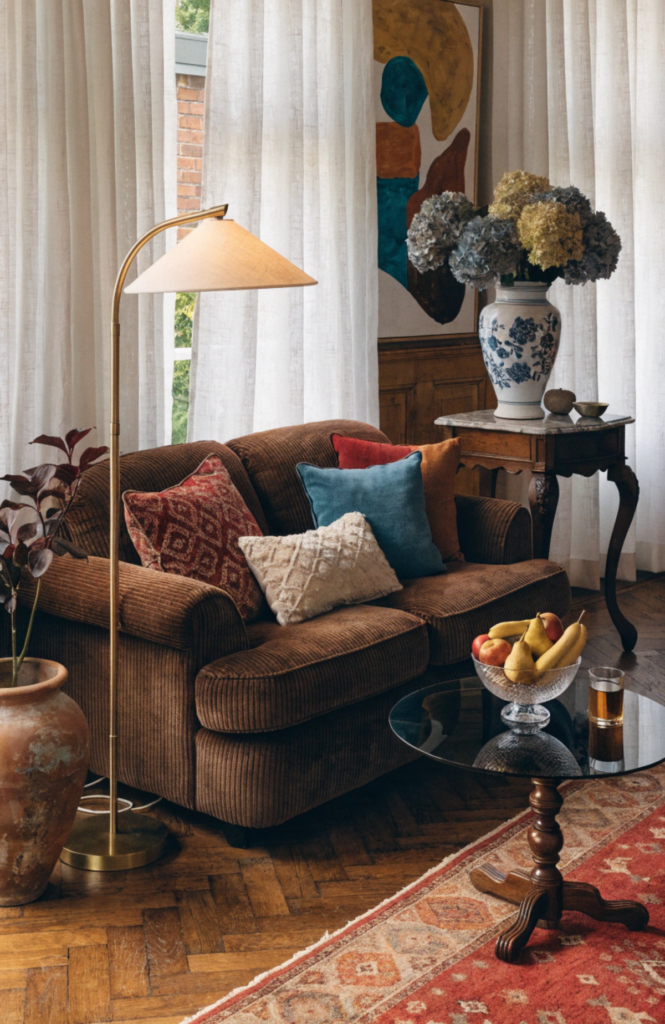
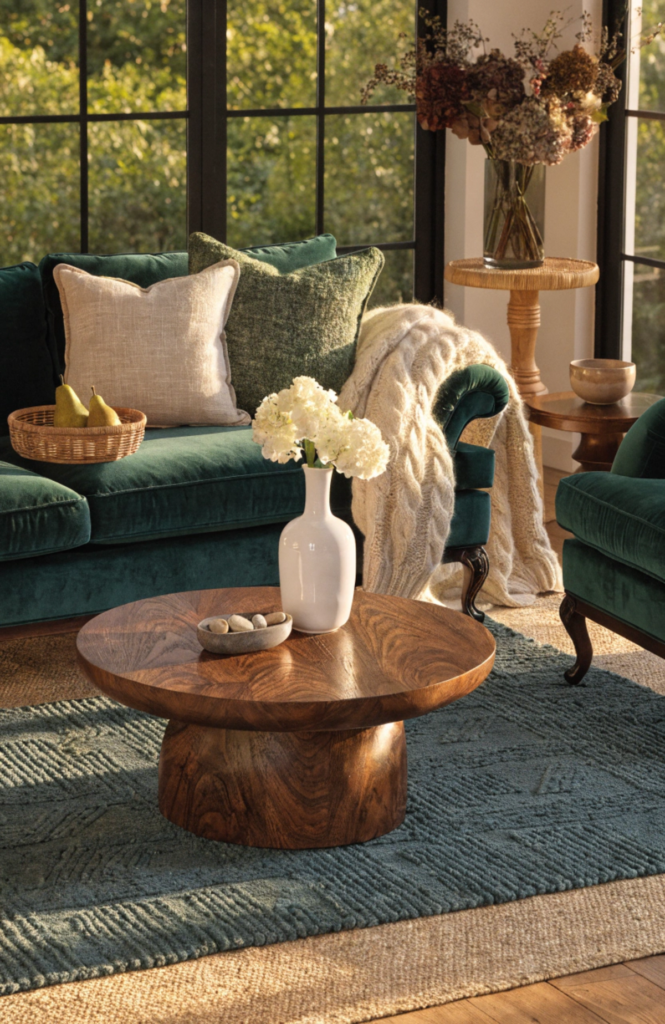
The most visually rich and inviting rooms layer multiple textures intentionally. A velvet sofa sits on a jute rug. Linen cushions are mixed with knitted ones and one or two in polished silk. A rough ceramic lamp base sits on a smooth marble tray. Woven baskets hold throws. These contrasts are what make the eye travel around a room with pleasure rather than taking it all in and moving on.
Natural materials are your greatest ally here. Wool, linen, cotton, leather, rattan, jute, wood, stone, and ceramic all bring an organic richness that synthetic materials rarely replicate. They also photograph beautifully, which matters if you have any aspiration toward a Pinterest-worthy home.
THE FIX:
Audit your living room for texture. If every surface is smooth and every fabric is the same weight, your room needs texture immediately. Add a chunky knit throw, a rattan basket, a rough stone bookend, a jute rug layered under your main area rug, and a ceramic or terracotta vase. These additions are almost universally affordable and have an outsized impact on how rich and layered the room feels.
The Golden Rules of a Room That Always Feels Expensive
Beyond the ten mistakes above, there are a handful of universal principles that designers return to again and again regardless of budget, style, or room size. Think of these as the underlying grammar rules of interior design. Once you understand them, every decision you make in your living room becomes more intentional and more effective.
Always Have a Focal Point
Every great room has one dominant focal point that anchors the entire arrangement. This might be a fireplace, a large piece of art, a statement sofa, a dramatic window, or a beautifully styled shelving unit. All other furniture should be arranged in relation to this focal point, not competing with it. If your room currently lacks a clear focal point, create one.
Embrace Negative Space
Negative space is the empty space in a room, and it is just as important as the objects that fill it. Rooms that are overstuffed lose their breathing room and their elegance. Give your furniture space to exist. Leave walls partially bare. Allow the floor to show between pieces. Negative space is not wasted space. It is the room’s breath.
Invest in What You Touch Every Day
The places where your skin makes contact with a room are the ones that determine how luxurious the space truly feels. Invest in the best sofa fabric you can afford. Get the softest throw blanket. Choose a rug with a pile deep enough to be satisfying underfoot. These tactile investments communicate quality in a way that no amount of decorative styling can replace.
Use Mirrors Strategically
A well-placed mirror is one of the most powerful tools in an interior designer’s kit. It reflects light, doubles the apparent space in a room, and adds a sense of depth that is genuinely magical. Place a large mirror on a wall that reflects either a window or a beautiful part of the room, and the effect is transformative. Avoid placing mirrors so they reflect unflattering views like doors, walls, or corridors.
“The most beautiful rooms are never finished. They evolve. They accumulate. They remember who lived in them.”
The Bottom Line
Transforming your living room from a space that feels cheap to one that feels genuinely considered and beautiful does not require unlimited money or a professional interior designer on speed dial. What it requires is awareness. Once you can see these ten mistakes, you cannot unsee them, and that awareness is the most powerful design tool you will ever have.
Start with the changes that cost the least and have the biggest visual impact: rehang your art, reorganize your surfaces, layer your lighting, and resize your thinking when it comes to rugs and curtains. These changes alone will shift the atmosphere of your living room in ways that friends and family will notice and comment on, even if they cannot quite put their finger on why the room suddenly looks so much better.
The living room is where you begin and end every day. It is where guests form their first impression of your home. It is where family gathers, where you exhale after a long day, and where the most ordinary moments of life become memory. It deserves your attention, your intention, and your very best design decisions. Now you know exactly where to start.

Fene Radebe is the founder of Lifestyle Leaders Hub, a lifestyle destination covering home décor, fitness, food, beauty, and fashion. A seasoned property developer and interior designer, Fene curates expert-driven content to help readers elevate their everyday lives with purpose and style.
Pingback: The Ultimate Seasonal Home Maintenance Checklist for Every Year: A Developer’s Guide to Preserving Value and Curb Appeal - lifestyleleadershub